
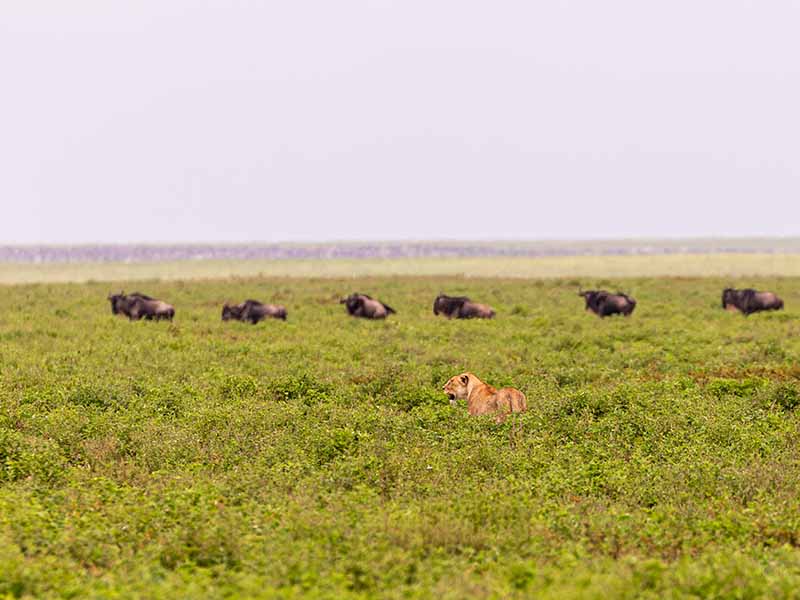
Most people book a Serengeti safari. Fewer people book the right part of the Serengeti — and the difference, measured in wildlife density, exclusivity, and sheer experience, can be significant.
At 5,700 square miles, the Serengeti is less a destination than a system. Five distinct regions, each with its own terrain, wildlife patterns, and seasonal logic. The migration moves through all of them across the course of a year — but each region offers something worth experiencing entirely on its own terms, regardless of whether the herds are there.
What follows is how to read that system: what each region does best, when to be there, and where to stay.
The South: Ndutu, the Southern Plains & Kusini
When: December through March (calving season); May–June (herds departing north)
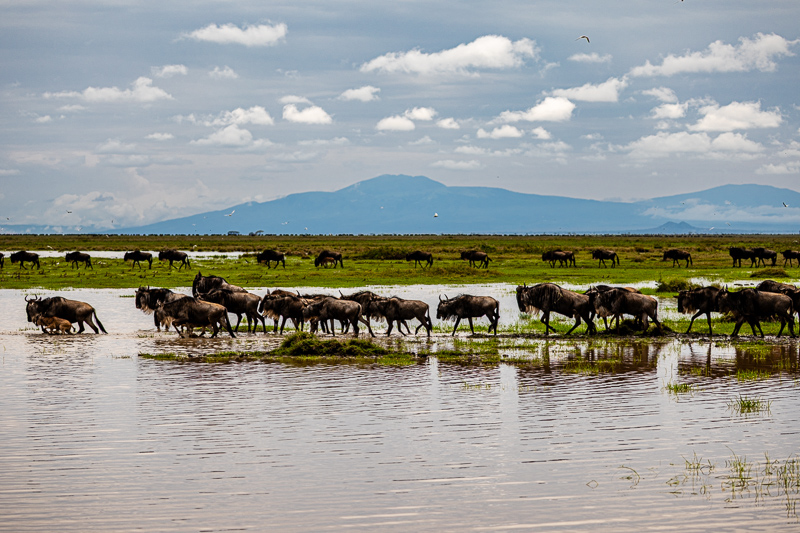
The southern Serengeti — stretching from the Ndutu woodlands across the short-grass plains toward the Gol Mountains — is where the migration begins. Not with a crossing or a chase, but with birth. During the calving season, roughly two million wildebeest and zebra concentrate on these mineral-rich plains, and at the peak, thousands of calves are born daily. Predators follow accordingly: cheetah, lion, hyena and jackal, all operating at close range on open ground where there’s nowhere to hide and no shortage of opportunity.
The landscape is made for this. Wide, flat, uninterrupted — you can watch a hunt unfold across half a mile of grass, track a cheetah from the moment it locks onto prey. The sky here feels larger than anywhere else in East Africa.
Outside of December through March, the south quiets considerably. Many camps close when the herds move on — which is part of what makes the season so concentrated when it’s good.
Where to Stay
Serian’s mobile camp positions itself on the southern plains during calving season with a level of access and intimacy that fixed lodges simply can’t match. Wayo Africa runs walking-focused mobile camps that change the rhythm of game viewing entirely — on foot at dawn with a Maasai guide, the plains feel different. Ndutu Safari Lodge, sitting between two seasonal lakes at the woodland edge, is the region’s only permanent option and earns its reputation for sheer proximity to the action. For a larger-footprint mobile with exceptional guiding, Nomad’s Serengeti Safari Camp and Bushtops offer strong seasonal options in the south.
The Central Serengeti: Seronera & the Moru Kopjes
When: Year-round, with peak activity April–June as the migration passes through
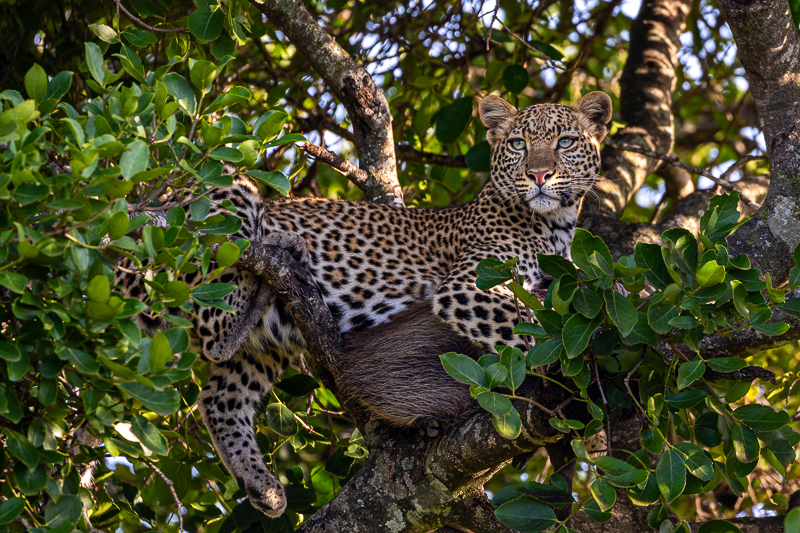
Seronera sits at the geographic heart of the Serengeti, and for decades it was synonymous with the park itself — the most-visited, best-known section. That familiarity has a downside: it carries more tourist traffic than the other regions. But it also has something the other regions don’t always offer: year-round wildlife of genuine quality.
The Seronera River is one of the few permanent water sources in the park, which means resident game concentrates here even during the dry months. The leopard density around the riverine forest is exceptional — this is one of the most reliable places in Africa to find them, often draped across a fever tree with yesterday’s impala. Lion prides hold territories on the open plains; hippos occupy the river pools. The Moru Kopjes to the south add topographic interest — ancient granite outcrops used by black rhino (one of the last Serengeti populations), klipspringer, and lion.
The migration passes through the central corridor between April and June, briefly turning the Seronera plains into something close to the spectacle of the south, before the herds funnel north toward the river crossings.
Where to Stay
Asilia’s Dunia Camp is one of the central Serengeti’s most consistently strong options — year-round access, excellent guiding, and a position that works whether the migration is present or not. Lemala Ewanjan sits at the quieter end of the central ecosystem, deliberately small and well-suited to guests who want Seronera’s wildlife without the associated traffic. Nimali Serengeti rounds out a strong central trio, offering intimate camp standards and direct access to the kopje country where the leopard density justifies the positioning on its own.
The West: Grumeti & the Western Corridor
When: May through July, as the migration moves through the corridor toward the north
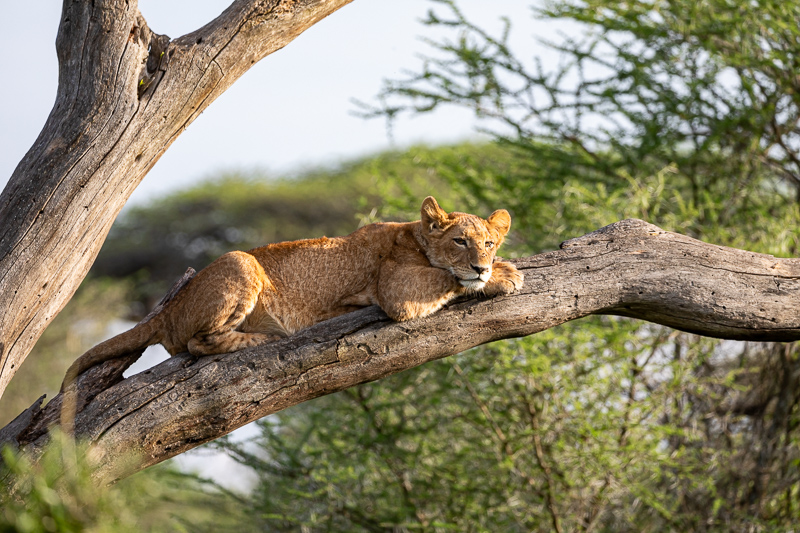
The western Serengeti is the most underused region on most itineraries — and that’s a significant missed opportunity. The Grumeti River crossing, which happens as the herds push through the corridor between May and July, rivals anything the Mara River produces later in the year. The crocodiles here are enormous — some of the largest recorded — and unlike the Mara, you may have the riverbank almost entirely to yourself.
Beyond the crossing season, the western corridor’s woodlands and seasonal swamps support resident game at good density. Topi, waterbuck, buffalo, and giraffe move through. The birding shifts significantly here — the woodland interior species don’t appear in the south or north, which matters to guests with serious ornithological interest.
The Grumeti Reserves, which border the western corridor, operate as a private wildlife area with their own conservation programme. The result is extraordinary exclusivity: vast terrain, minimal vehicles, and a landscape that feels genuinely unexplored.
Where to Stay
Singita is the defining presence in the western Serengeti. Singita Sabora Tented Camp — mobile in feel but permanent in quality — sits in a private wildlife area with access that changes what game driving means. Singita Faru Faru Lodge and Singita Mara River Tented Camp (the latter positioned for the crossing season) round out a camp portfolio that’s difficult to match anywhere in East Africa for sustained exclusivity and guiding standards.
The North: Kogatende & the Lamai Wedge
When: July through October (river crossings); November through May (exclusive, resident game, dramatically fewer visitors)
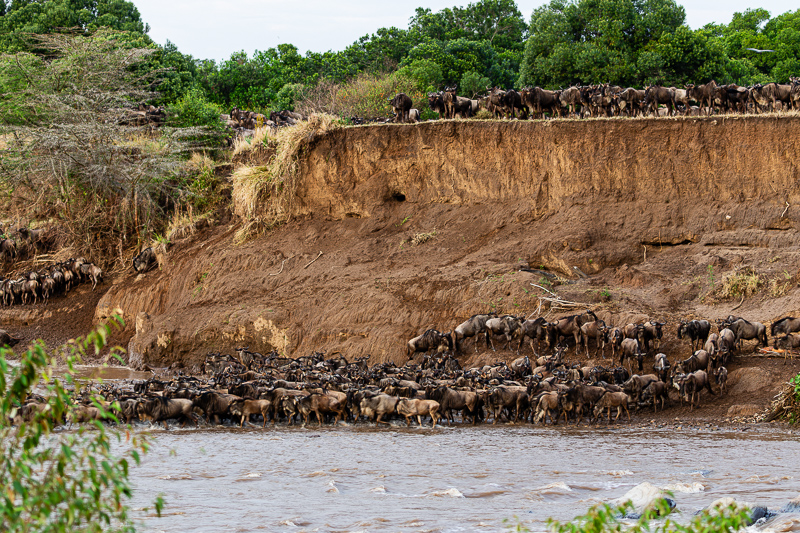
The northern Serengeti is where the migration’s most iconic images are made. Between July and October, the herds arrive at the Mara River in waves — thousands of wildebeest compressing at the bank, reading the water, reading the crocodiles, reading each other — before the chaos of a crossing breaks. It’s genuinely one of the most extraordinary wildlife events on the planet, and from the right position above the Lamai Wedge, you can see multiple crossing points simultaneously.
What fewer people know is what the north offers outside of crossing season. The Lamai triangle supports resident wildlife year-round — established lion prides, leopards hunting the riverine forest, elephants moving in large herds, buffalo on the open ground. The terrain is more varied than the south: wooded drainage lines, rocky kopjes, the Mara River cutting through. And between November and May, visitor numbers drop sharply. Camps that operate year-round in the north see their guest count fall to a fraction of peak season levels. Entire sections of the reserve can feel private.
For return visitors, the quiet season in the north is often the Serengeti trip they didn’t know they were waiting for.
Where to Stay
Lemala Kuria Hills occupies a clifftop position above the Mara River that makes it one of the best-located camps in the ecosystem for crossing season — the sightlines from camp alone justify the positioning. Nomad’s Lamai Serengeti takes a more intimate approach, with exceptional guiding and direct access to the western side of the Lamai Wedge. Serian’s Lamai camp offers the same standards that define Serian’s southern operation, translated into northern terrain with accessibility to a number of crossing points. For those wanting an ultra-exclusive approach with deep cultural integration, Legendary Expeditions’ presence in the north provides something that feels genuinely different from the mainstream crossing-season experience.
The East: Namiri Plains & the Gol Mountains
When: Year-round for resident cats and predators; December through March when the herds push east from the southern plains
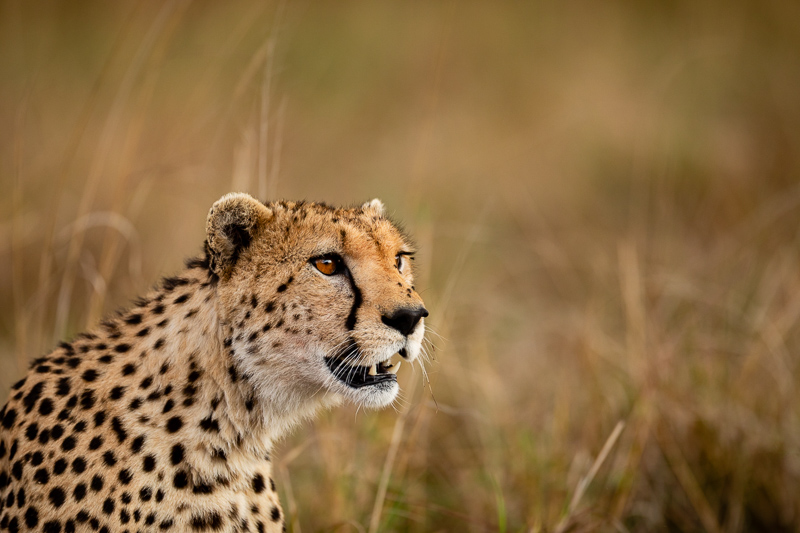
The eastern Serengeti is where the Serengeti’s cheetah story is told most clearly. The Namiri Plains — a dedicated conservation area in the eastern ecosystem, closed to tourism for nearly two decades to allow cheetah populations to recover — reopened to a handful of small camps and has quietly become one of the most significant predator destinations on the continent. The open grassland here is ideal cheetah terrain: wide sightlines, good prey density, and the kind of uninterrupted space a hunting cat needs. Leopard and lion are resident too, and because access is restricted to very few camps, the vehicle pressure is negligible year-round.
Beyond the plains, the Gol Mountains rise from the east — ancient volcanic kopjes that add a different dimension entirely. Wild dog packs move through seasonally, and when the herds push east from Ndutu during calving months, the eastern plains receive migration overflow with a fraction of the audience.
This is specialist territory. It rewards guests who have already seen the Serengeti’s headline acts and want something that goes deeper — or those willing to start there and build outward.
Where to Stay
Asilia’s Namiri Plains is the camp that put this region on the map, built specifically for predator-focused game viewing with guiding standards that reflect it. Lemala Nanyuki offers a similarly intimate approach on the eastern plains, with year-round access and strong cat-tracking experience. Entara’s Olmara Camp brings a more exclusive, low-footprint feel to the eastern ecosystem — well-suited to guests who want genuine remoteness alongside serious wildlife. Elewana’s Serengeti Migration Camp completes the picture for those drawn to the explorer aesthetic, sitting at the edge of the ecosystem where the Gol Mountains begin to dominate the horizon.
How to Read the Migration Calendar
The migration isn’t a single event — it’s a continuous circuit, and the herds are always somewhere in the system. What follows is the pattern the wildebeest typically follow. It’s a reliable framework, not a fixed schedule. The migration moves according to rainfall, grass condition, and instinct — all of which vary year to year. Use this as a planning guide, not a guarantee.
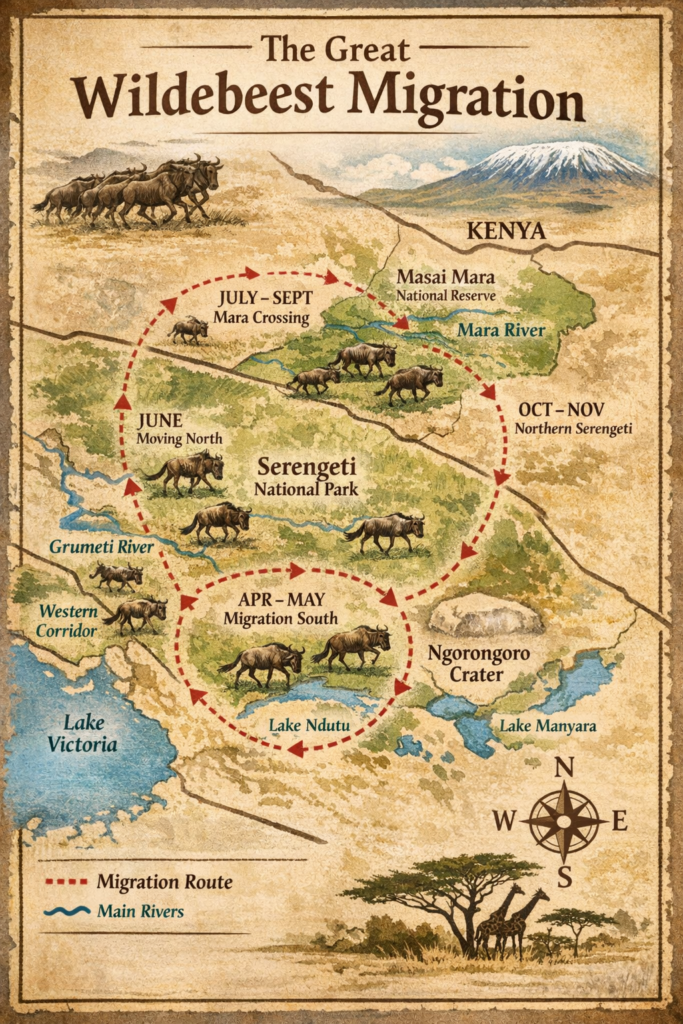
December–March: Herds typically on the southern and eastern plains. Calving season. Peak predator activity.
April–May: Herds generally moving north through the central corridor. Green season, fewer visitors, excellent photography light.
May–July: Western corridor and Grumeti crossings, when conditions allow. Underrated and undervisited.
July–October: Northern Serengeti and the Mara River crossings — the trend holds most reliably here, though crossing timing within this window varies considerably. Peak season. Book well in advance.
November: Herds beginning the southern return, timing depending on the short rains. Green landscapes, transitional — excellent for photographers, and increasingly competitive on availability.
Choosing Your Region
The honest answer is that the right region depends entirely on when you’re going and what kind of experience you’re after. A single well-positioned camp in the right region at the right time will outperform a multi-camp itinerary that ignores seasonal logic.
If you have six or more nights in the Serengeti, combining two regions — south and north, or west and north — gives you both the spectacle and the intimacy, the open plains and the wooded river country. You leave understanding the ecosystem as a whole rather than a single frame of it.
If you’re working with three or four nights, the decision is simpler: identify your travel dates, identify where the migration is, and position yourself accordingly.
The Serengeti rewards specificity. It’s a large enough ecosystem to get wrong, and specific enough that getting it right makes an enormous difference.