We left Nairobi at seven in the morning to beat the Limuru fog — one of those pieces of Kenyan driving logic that makes complete sense once you’ve sat behind a heavily laden truck on that hill in zero visibility. The road north through Gilgil and Nyahururu does something gradual to the atmosphere. The air cools a little. The horizon opens. The sky, which had felt low and pressed close through the city, lifts and keeps lifting, until there is simply more of it than you’re used to. By the time we turned into Mugie Conservancy, five and a half hours later, the morning felt long ago.
The camp is canvas and wood, built low to the ground, with rooms large enough that you don’t feel you need to go anywhere. Birdlife runs through it all day — weavers, sunbirds, hornbills moving between the trees — and we spent a good part of our first afternoon just watching it from the chairs outside, the heat thick enough that there was no real argument for doing anything else. Donna, Josh, and George looked after the camp side; Sammy and Daniel guided. All five had the quality that’s harder to find than it sounds: they noticed things, and adjusted plans without making it feel like an adjustment. Lunch was waiting when we arrived — light and well-timed, exactly right for midday in late February. Afterwards, the pool. It was ferociously hot outside, which made the water’s unexpected cold something of a surprise.
Mugie is split into two halves by the main road — roughly 25,000 acres on each side — and that scale is part of what makes it feel the way it does. It isn’t a small, contained ecosystem where the same animals circle predictably. It’s a proper piece of landscape, and things happen at the edges of it that you don’t quite expect. That evening, Sammy took us across to the quieter half of the conservancy.
The two male cheetahs were on a mound. Big animals — one collared and being tracked by the researchers, the other carrying the evidence of recent trouble: a bad lip, one eye that had seen better days. Both had the particular build of cheetahs that have been doing this a long time in difficult country, and they had the bearing to match. They weren’t nervous. They watched us arrive and assessed us with flat, yellow-green eyes and then, apparently satisfied, went back to watching the plains. One of them scanned the horizon for a long time — head turning slowly, reading something in the grass we couldn’t see. Then the other stood, stretched, and the two of them moved off, unhurried, their long shadows angling east across the last of the afternoon light. We followed at a distance for a while before heading back to the dam.
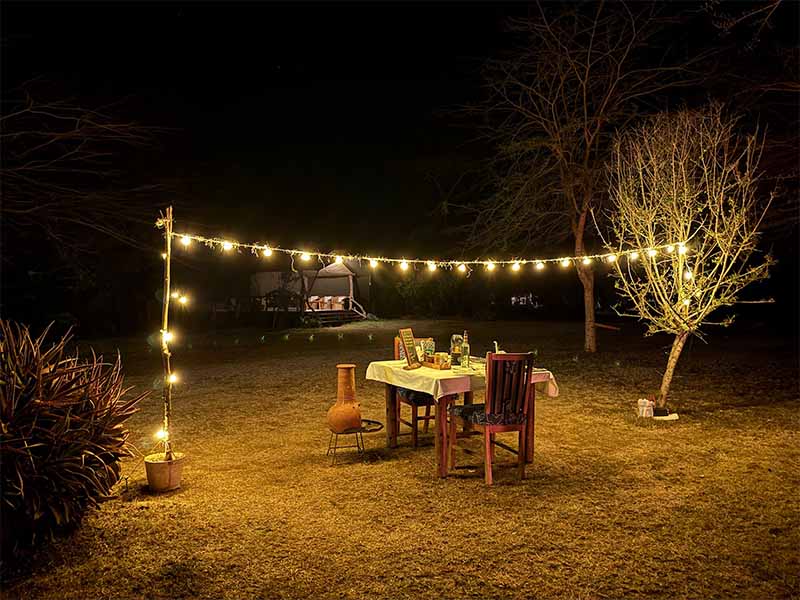
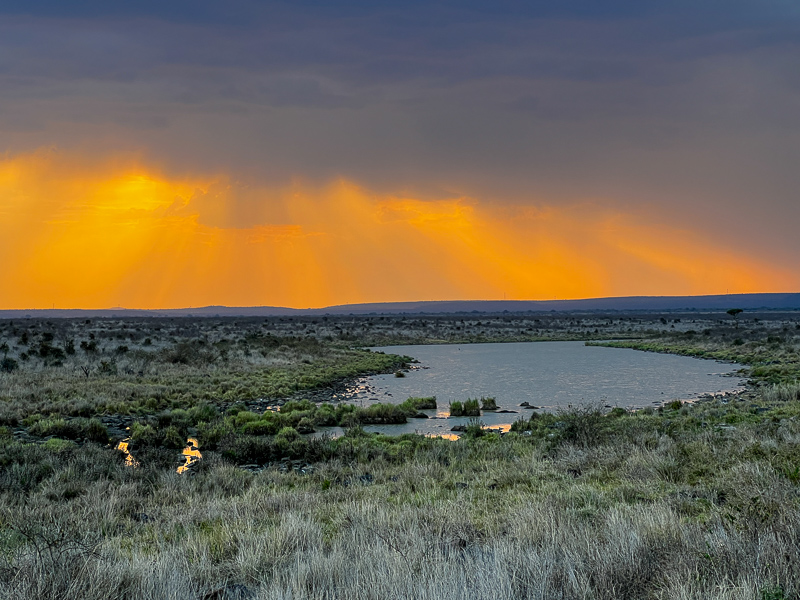
We came back to the dam for sundowners as the sun dropped behind the hills. The light at that hour in Laikipia goes quickly — one moment the water is bright and flat, then it shifts to copper, and then the colour deepens into something closer to amber, the surface of the dam holding the warmth of it long after the sky had moved on. Birds were settling into the reed beds. The air had cooled at the edges. Then dinner at camp, lit by lanterns, with the sounds of the bush arriving from different distances as the night settled in around us.
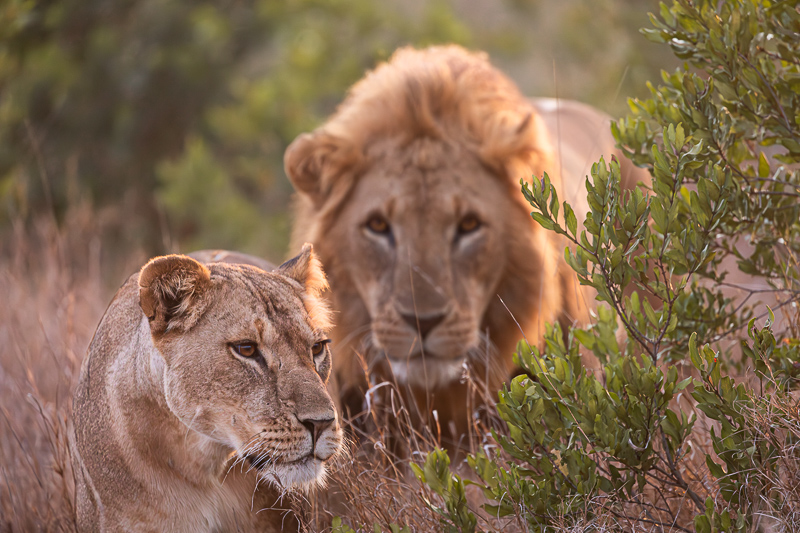
The lions called before dawn — that low, chest-deep sound that doesn’t seem to come from any particular direction, only from somewhere close. By the time we left camp in the early morning, the light was still grey and flat, and they were already moving. Two big males and four females crossed the track directly in front of us — not running, not startled, simply moving through their country at their own pace. They passed out the other side and into the bush, and we sat in the vehicle for a moment after they’d gone. Nearby, another male and female from the same pride were working the same ground — eight lions in total, most of them operating across the same area at the same time. The males had the particular indifference to each other that comes from familiarity: they passed within twenty metres without any display, neither threatening nor acknowledging. They had done this before.
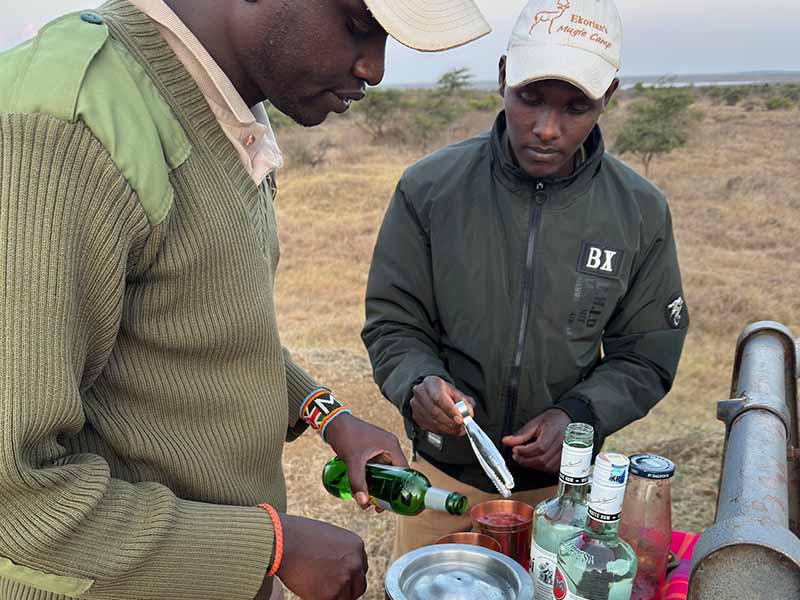
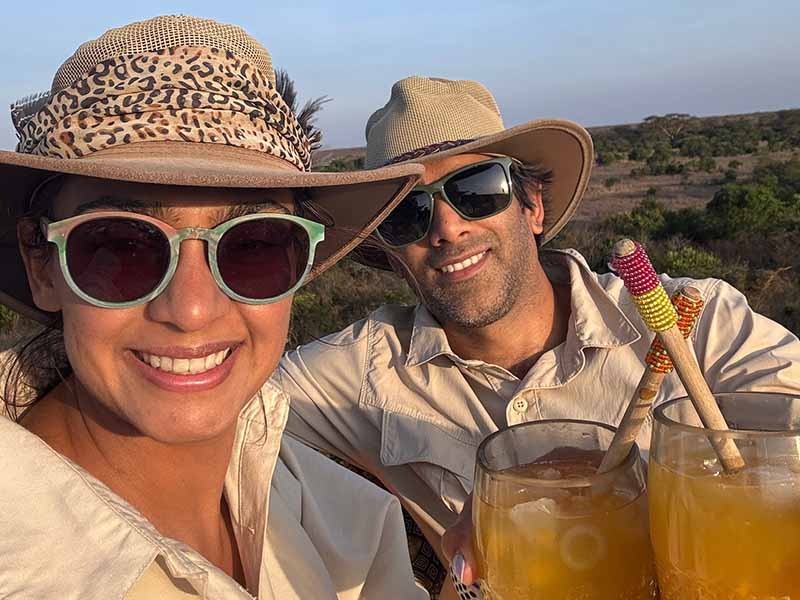
The afternoon was more contemplative. A large buffalo herd moving through the open scrub, the dust rising pale and slow behind them. A brown snake eagle that had decided on a particular dead tree and showed no interest in leaving it — we spent longer with that bird than we had planned, watching it watch the ground below with a patience that made our own feel amateur. Then the vehicle stopped, and Sammy laid out the sundowner setup on the bonnet: fresh strawberries, the cocktail ingredients chilled and ready to mix. There’s just something about a good cold drink in the middle of the bush in that last hour of light — the warmth of the day still in your skin, the animals starting to move again in the cooling air, a glass in your hand that has no business being that good out here. We stayed until the light was nearly gone.
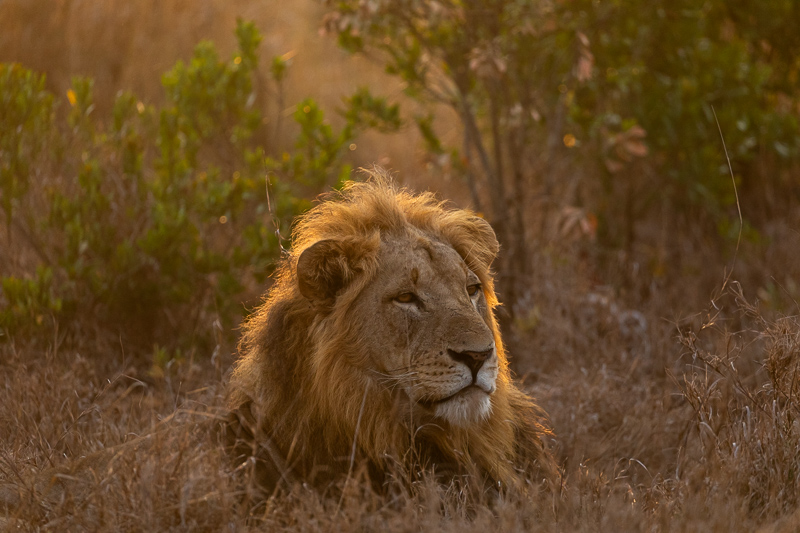
Sunday’s early drive found six lions — lionesses and cubs — from the same pride, working the conservancy in the soft morning light. The cubs were still small enough that they hadn’t yet learned to look like they owned the place, though they were practicing. Along with them, elephants: a few in the early drive, and then more later, moving through the landscape with that particular quality of bulk and quietness that elephants have when they’re going somewhere without being chased.
After breakfast, we went kayaking on the dam.
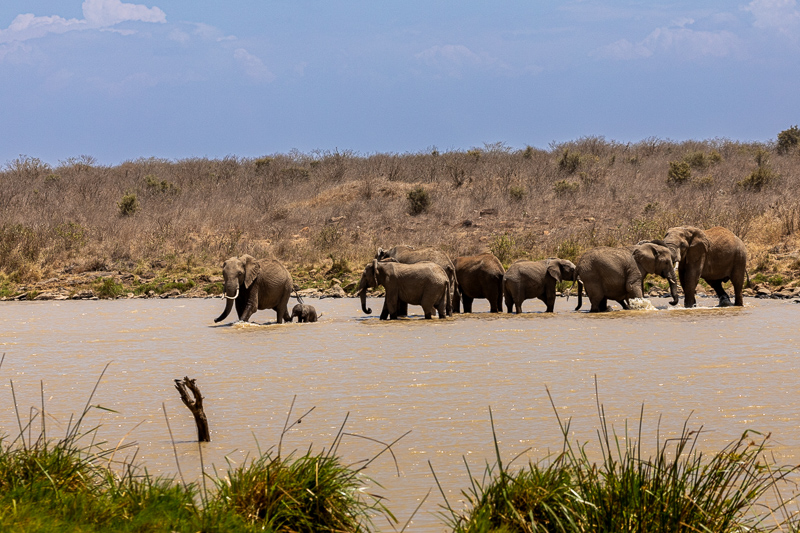
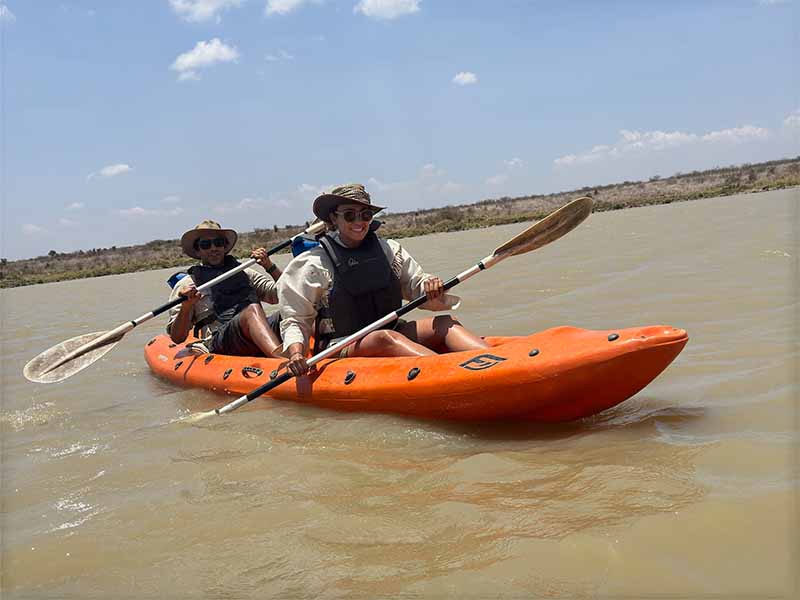
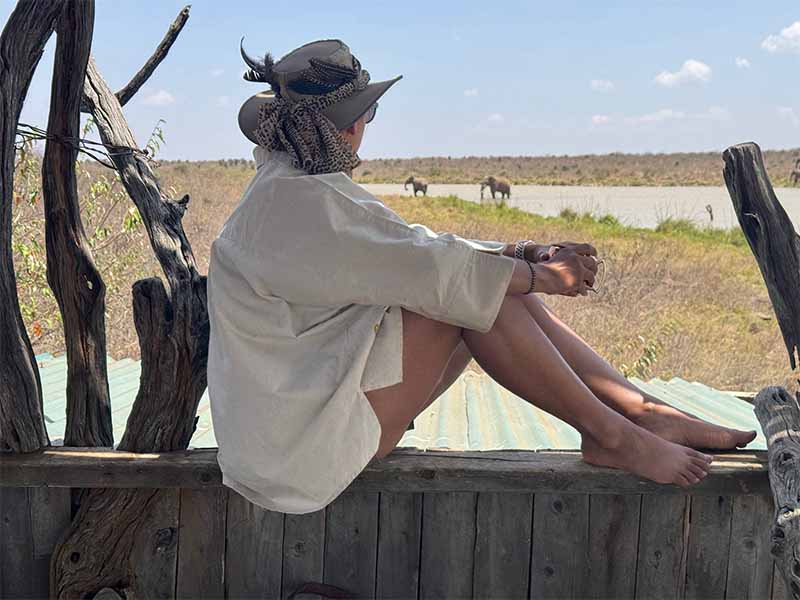
The experience of being on the water changes the proportions of the place entirely. From a game drive vehicle you have height, and glass, and the insulation of an engine; the animals exist at a comfortable remove, framed and manageable. A kayak offers none of that. You’re sitting at water level, paddle across your knees, with nothing between you and the sounds of the conservancy — the birds in the reeds close enough to hear individually, the water making small sounds against the hull. We’d been out for a while when the elephants started coming down to drink. They came in from both sides of the dam, moving through the bush at the edges and then out into the open, a few at first and then more — large cows, younger animals, a calf that pushed past two adults to reach the water first and then stood there with its trunk submerged, apparently satisfied. From the kayak, their footfalls in the shallows carried across the water clearly. The sound of them drinking was close enough to feel less like observation and more like company.
We stayed on the water longer than we’d planned, then pulled the kayaks out and had lunch by the dam — a meal that earns its ease when you’ve been on the water all morning, with a breeze coming off the surface and the elephants still moving along the far bank.
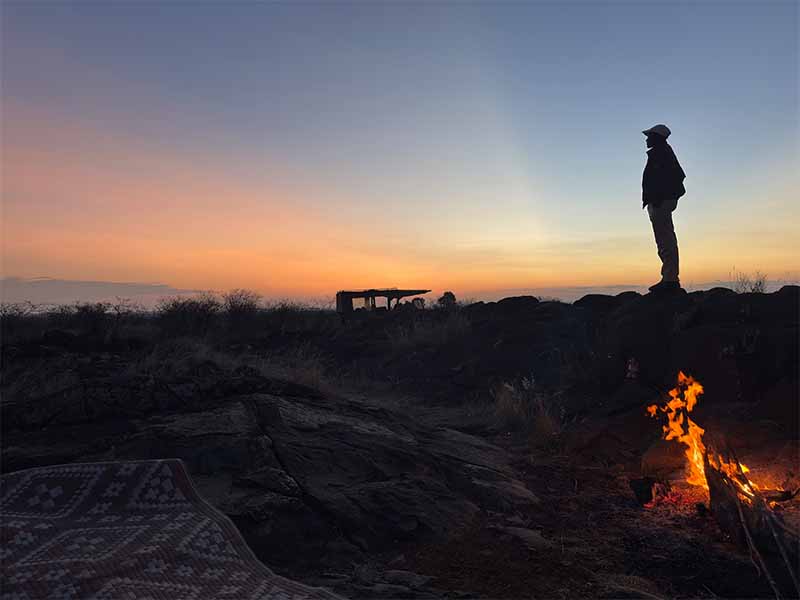
In the evening, we walked out to a rocky outcrop for sundowners — a short walk from camp, but enough elevation to open the plains in every direction. The light was going fast by the time we got there, the sky cooling from orange through to a deep, bruised violet over the hills to the west. It’s the kind of spot that makes you understand why Laikipia holds the light the way it does — the land is high enough, and flat enough, and wide enough that the sky above it feels proportionate to the space below. Dinner was back at camp, under a clear sky heavy with stars, the lanterns lit along the path and the night air carrying the sounds of whatever was moving through the conservancy beyond the camp’s perimeter.
We left on Monday morning around nine — unhurried, warm goodbyes, the slow kind of departure that a camp like this earns. Rather than retracing south through Gilgil, we turned off at Ol Kalau and followed the escarpment road back through the Aberdares: montane forest on one side, the wide valley floor below on the other, cloud building over the peaks. It’s a different kind of Kenya from Mugie — wetter, greener, enclosed — and the contrast made both places feel more distinct. We were back in Nairobi by mid-afternoon, earlier than the drive should have allowed, or so it seemed.
Three nights at Ekorian’s had given us eight lions before breakfast, two battered cheetahs reading the plains at dusk, and an hour on a dam with elephants drinking close enough to hear. None of it was orchestrated. Mugie is too large and too genuinely wild for that. What the camp provides is the access, the guiding, and the unhurried rhythm that lets the conservancy reveal itself on its own terms. That combination, quietly delivered, is harder to find than it looks.