
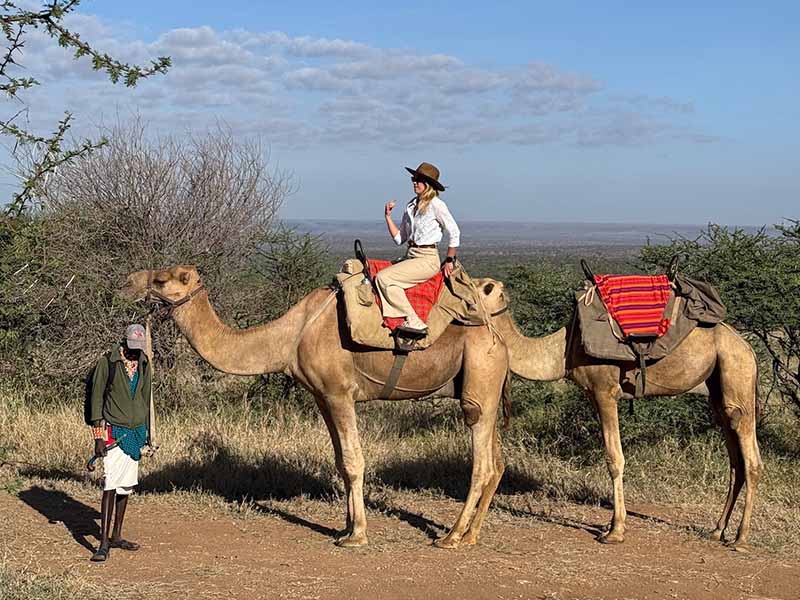
Most people planning a Kenya safari start with the national parks. The Masai Mara. Amboseli. Tsavo. These are extraordinary places, and there are good reasons they appear on every shortlist. But there is another layer to Kenya’s wildlife story — one that produces incredible game drives, rarer encounters, and a more meaningful relationship between your visit and the land you’re visiting.
Kenya’s private conservancies have been quietly transforming the country’s safari landscape for three decades. And if you haven’t built one into your itinerary, you’re missing the most interesting part of the story.
Where the Wild Is Privately Protected
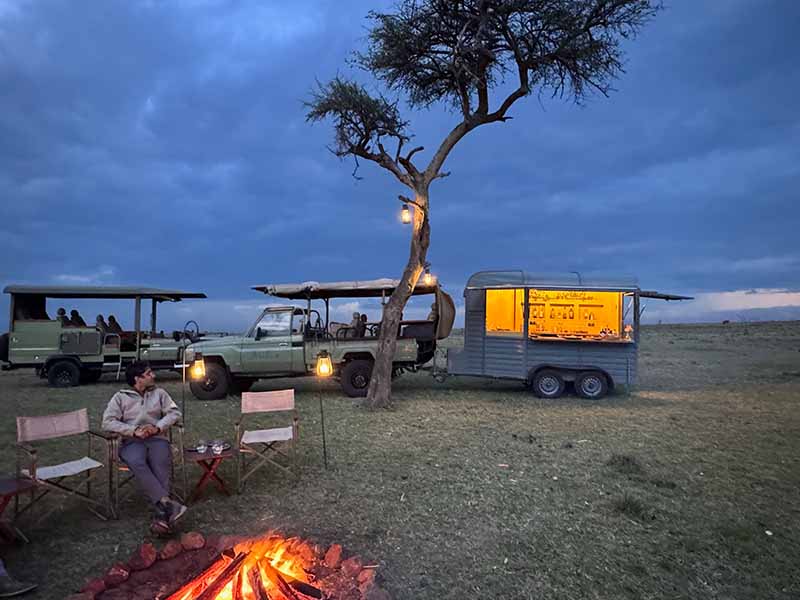
A private conservancy is land that has been set aside — by local communities, private landowners, or a combination of both — specifically for wildlife and conservation. No public access. No park fees distributed through a central government. A self-contained ecosystem managed for wildlife, funded directly by the guests who stay within it.
The distinction matters more than it sounds. In a national park, the economics of conservation are one step removed from the visitor. In a private conservancy, they are the same thing. Your bed-night funds the rangers who patrol the perimeter. The community lease payments that make it more valuable to the surrounding people to have wildlife living on the land than cattle. The research programmes tracking endangered species. The schools and clinics that give the next generation a genuine stake in keeping the wild wild.
It is, in the best possible sense, a model that makes conservation pay for itself.
What Only a Conservancy Makes Possible
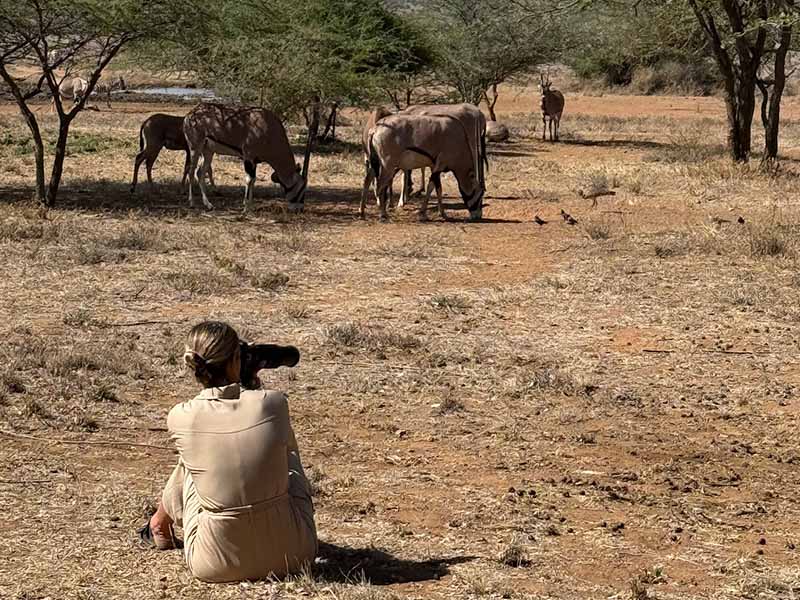
The differences between a national park and a private conservancy reveal themselves almost immediately — often before you have even left camp.
After dark, the safari begins again.
In Kenya’s national parks, vehicles must be off the road by sunset. In a private conservancy, the day simply shifts into something quieter, more intimate. Leopards begin to move. Aardvark emerge from their burrows. Lions slip into the night and behave as they would if no one were watching. It is a side of the bush few ever see — and one that simply does not exist within the parks.
On foot, everything changes.
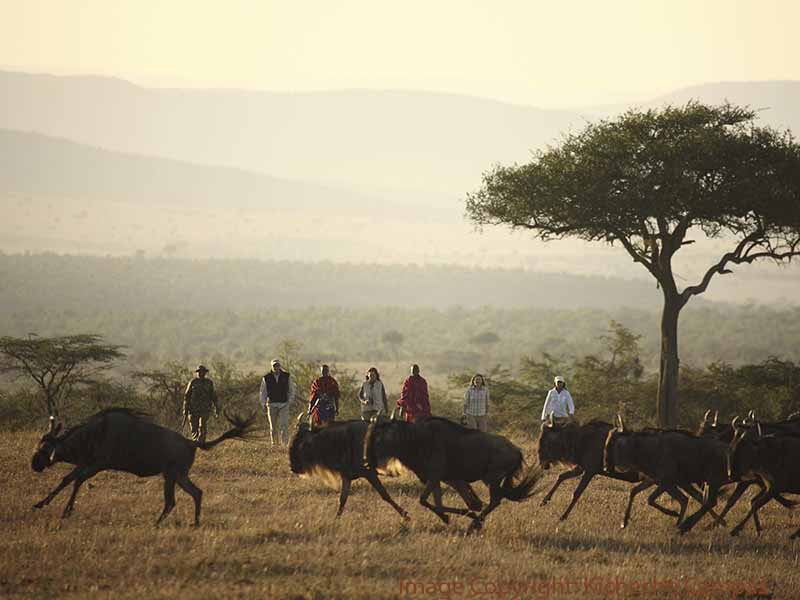
There is no truer way to understand an ecosystem than by walking through it. The scent of the earth, the detail in every track, the awareness of your own presence within it — no longer removed, no longer observing from a distance. Walking safaris are not permitted in most Kenyan national parks. In a conservancy, they are an essential part of the experience.
Freedom to follow the moment.
In national parks, vehicles must remain on designated tracks. In a conservancy, guides can respond instinctively — leaving the road to follow a cheetah, positioning perfectly for a sighting, or simply stopping where the landscape asks you to pause. The result is not just better viewing, but a more natural, uninterrupted encounter with wildlife.
Space, in every sense of the word.
Private conservancies operate on a scale that national parks cannot replicate. Vast areas of land, with only a handful of camps and a carefully limited number of guests. There are no queues, no competing vehicles. When a cheetah climbs a termite mound, it is not a spectacle shared with dozens — it is a moment that feels entirely your own. The wildlife moves at its own pace, and your experience of it remains personal, unhurried, and quietly exclusive.
The Conservation Programmes You Can Be Part Of
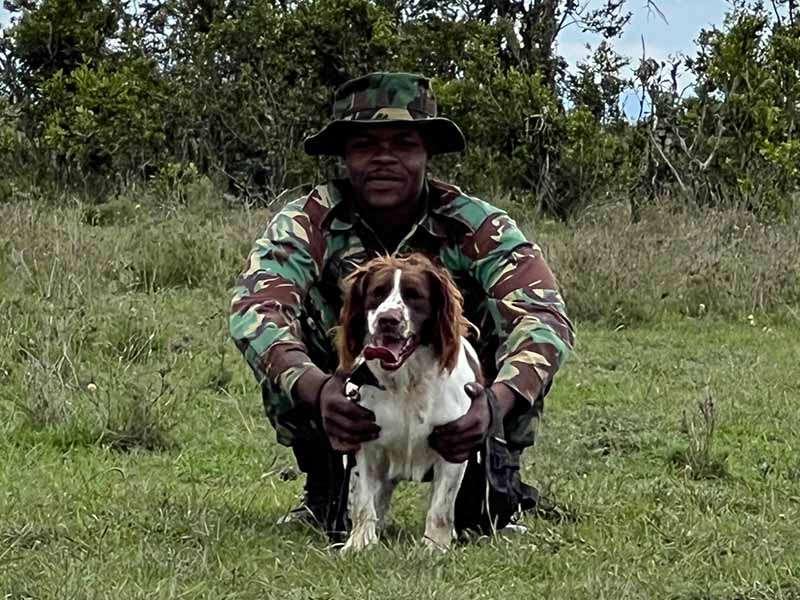
The best conservancies don’t just protect wildlife passively — they run active programmes, some of which guests can participate in directly.
At Mugie, guests can join the bloodhound tracking programme — working alongside trained scent hounds and their handlers to locate and monitor predators across the conservancy. It’s conservation fieldwork, and it’s extraordinary. Mugie also has a rescued giraffe, Tala, who has been returned to the wild but remains comfortable enough with people to encounter at close range — a reminder that conservation is not always a distant, abstract undertaking. Sometimes it’s a giraffe, unexpectedly close, regarding you with large calm eyes on a morning game drive.
At El Karama Conservancy, also in Laikipia, the model is rooted in community partnership — the conservancy is family-owned and has operated alongside the local community for generations. Guests here can engage directly with ongoing wildlife monitoring and cattle-wildlife coexistence programmes, understanding first-hand how the relationship between pastoralism and conservation is being navigated in one of Kenya’s most complex landscapes. The diversity of wildlife — lion, leopard, cheetah, wild dog, reticulated giraffe, Grevy’s zebra — reflects decades of that work paying off quietly.
At Ol Pejeta Conservancy, the conservation story is one of the most urgent on earth: the last two northern white rhinos are here, under round-the-clock guard, part of a programme attempting to prevent the extinction of a subspecies in real time. Staying at Ol Pejeta is, among other things, a way of bearing witness to something that may not exist in a generation.
At Lewa Wildlife Conservancy, one of the founding conservancies of the Kenya model, the rhino sanctuary and Grevy’s zebra protection programme have been running for decades — and the Ngare Ndare Forest corridor connecting Lewa to Borana is one of the most important wildlife linkages in the country, allowing elephant herds to move between ecosystems without encountering human settlements.
These programmes exist because the right guests are choosing the right places. That is not a coincidence. It is the model working exactly as intended.
A Landscape of Many Conservancies
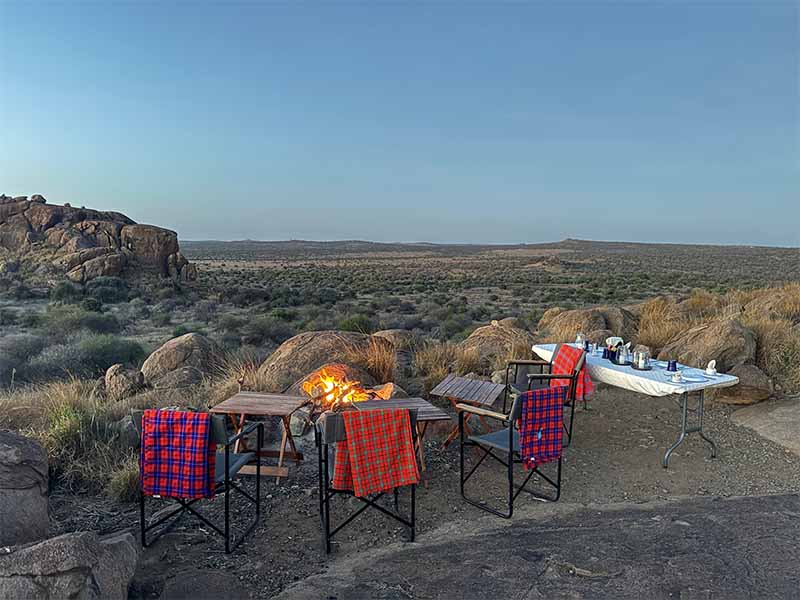
The conservancies of Kenya are not one single landscape, but many — each with its own rhythm, its own wildlife, its own sense of place. Choosing between them without guidance can feel overwhelming. But that is also the beauty of it: there is a conservancy for every kind of safari.
Laikipia unfolds slowly, and rewards those who stay.
A vast plateau of open skies and shifting light, where acacia scrub stretches into distant horizons and rocky outcrops rise above quiet river valleys. This is one of Kenya’s most compelling wildlife regions beyond the Mara — not for volume alone, but for rarity. Grevy’s zebra, reticulated giraffe, African wild dog move through these landscapes, alongside a strong and thriving predator population. Conservancies such as Mugie, El Karama, Ol Pejeta, Lewa, Borana, and Ol Malo define this region. For those seeking something beyond the familiar — or simply more space, more diversity, fewer vehicles — Laikipia feels like Kenya, undistilled.
The Mara, but not as you expect it.
Beyond the well-known boundaries of the Masai Mara National Reserve lies a quieter, more considered version of the same ecosystem. The surrounding conservancies — Mara North, Naboisho, Olare Motorogi, Ol Kinyei — share the same wildlife, the same sweeping plains, even the migration itself. But here, the experience shifts. Fewer vehicles. Greater freedom. The ability to walk, to drive at night, to stay longer at a sighting without interruption. It is not an alternative to the Mara. It is, in many ways, its most refined expression.
To the north, the landscape grows wilder.
Samburu and Laikipia North offer something altogether more remote — a drier, more elemental beauty shaped by the Ewaso Nyiro River and the dramatic folds of the Matthews Range. This is where you find species unique to the region: gerenuk standing impossibly tall, Beisa oryx moving in the heat haze, Somali ostrich and reticulated giraffe threading through the bush. At Sarara, set within the Namunyak Conservancy, the connection between land, wildlife, and community feels particularly tangible — a place where conservation is not an abstract idea, but something lived and shared.
To the south, where the land opens towards Kilimanjaro.
The Chyulu Hills rise in soft green waves, with Mount Kilimanjaro appearing on clear mornings like something almost imagined. Here, on Maasai-owned land bordering Tsavo West National Park, conservancies such as Mbirikani offer a different kind of safari — one deeply rooted in coexistence. This is one of Kenya’s most important lion conservation landscapes, where innovative, community-led programmes have quietly transformed the relationship between people and predators. The result is not just protection, but balance.
And further east, where few think to look.
In the Taita Hills, the Lumo Community Wildlife Sanctuary connects vital wildlife corridors between Tsavo East and Tsavo West. Community-owned and long-established, it has been delivering meaningful conservation impact for decades, largely out of the spotlight. For the traveller willing to step slightly off the expected path, this is a quieter, more personal Kenya — one where the story of conservation is felt just as much as it is seen.
Building a Journey Around The Conservancies
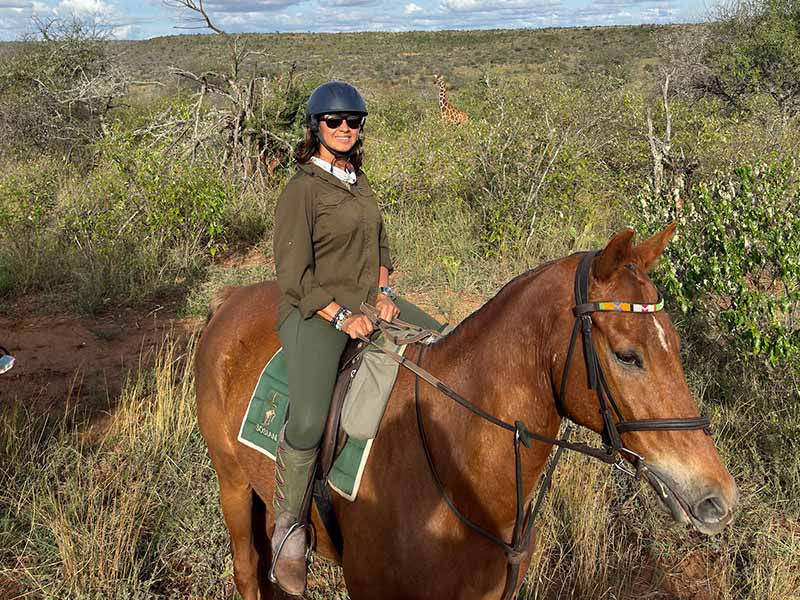
Kenya’s conservancies are not simply additions to a traditional safari route — in many ways, they are the route.
A journey might unfold from Laikipia to the Mara, or from Samburu down through the Laikipia plateau, or further south where the Chyulu Hills dissolve into Tsavo’s vastness. Each stop rooted in a private conservancy. Each one shifting the landscape, the wildlife, the feeling of the experience itself. What emerges is not a linear itinerary, but a progression — of ecosystems, of light, of perspective.
The classic safari circuits still hold their place, of course. But increasingly, the most considered journeys are shaped around the conservancies themselves, with the national parks playing a quieter, complementary role rather than defining the experience.
And time moves differently here.
Three nights is not an indulgence, but a minimum — the space required for a conservancy to reveal itself. For guides to read the land with you, not just for you. For wildlife to appear without urgency. For days that begin in the half-light before sunrise and stretch, unhurried, into evenings where lanterns mark the path back to camp.
It is in this rhythm that the distinction becomes clear. The national park offers scale — the iconic landscapes, the sense of magnitude. The conservancy offers something more personal: freedom of movement, depth of experience, and a direct connection to the conservation that sustains it all.
Together, they do what the best safaris are meant to do — not just show you Africa, but quietly change the way you see it.
Conservancy Itineraries
Three journeys. Three landscapes. Three entirely different ways to experience Kenya — each one shaped by the rhythm and reach of its conservancies.
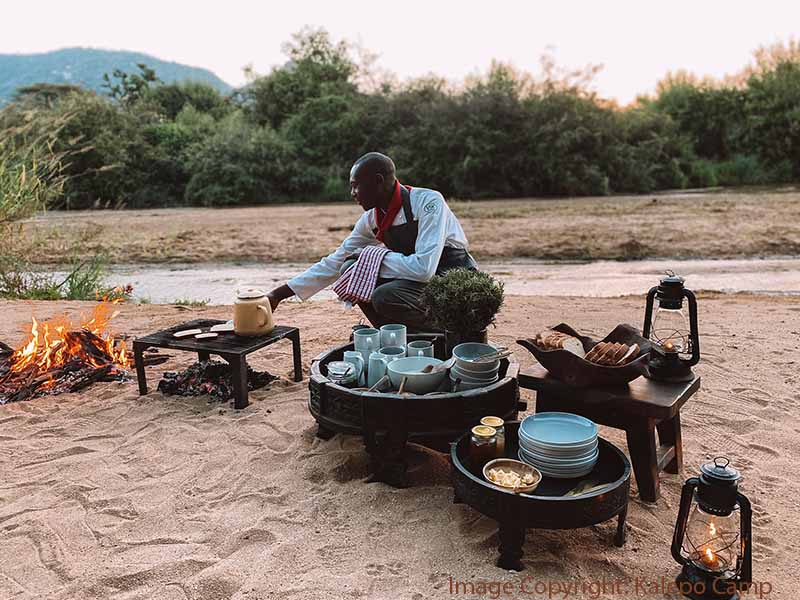
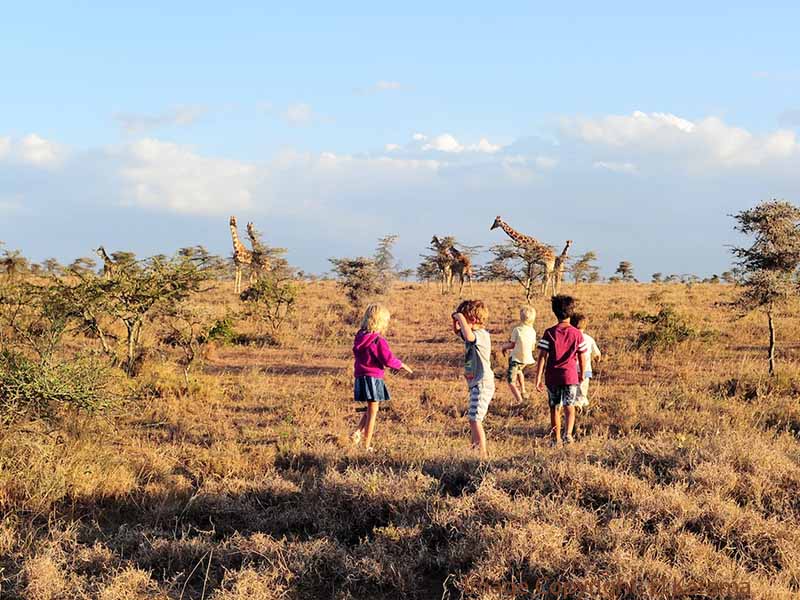
Why We Always Include One
We include a conservancy in almost every Kenya itinerary we design.
Not as an addition. Not as something that simply looks good on paper. But because it changes the entire quality of the experience — the sense of space, the freedom of movement, the way each moment unfolds without interruption.
It is the difference between observing and truly being there.
The easiest way to understand this is not in theory, but in experience.
At Ekorian’s Mugie, in Laikipia, it revealed itself slowly. Two battle-worn cheetahs resting on a termite mound as the light began to fade. Eight lions encountered before breakfast, the morning still cool and untouched. An afternoon spent kayaking across the dam, elephants arriving quietly to drink close enough that you could hear the pull of water.
Nothing rushed. Nothing staged. Just time, space, and the quiet privilege of being there as it happened.
→ Read about our stay at Ekorian’s Mugie, Mugie Conservancy, Laikipia
That is what a conservancy makes possible. And that combination — of access, instinctive guiding, and an unhurried rhythm — is rarer than it should be. It is also the reason we build journeys around them.