
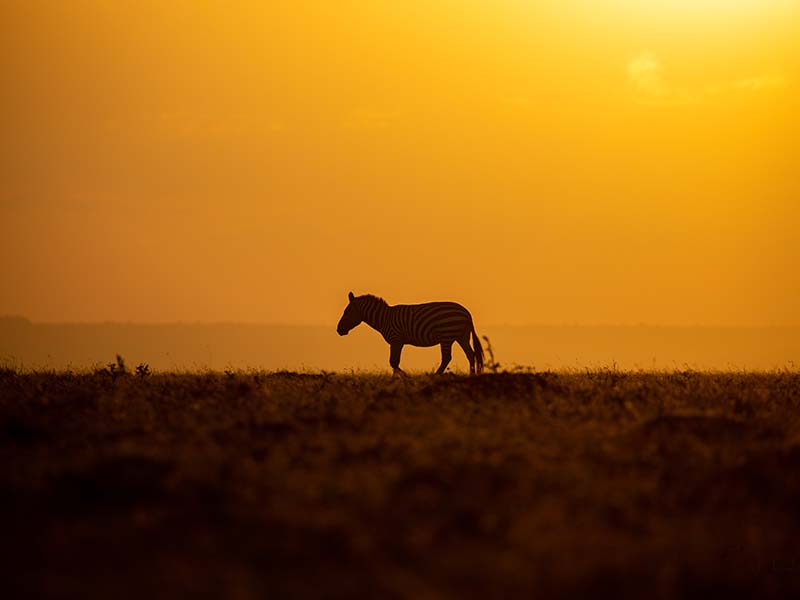
If you have ever dreamed of going on safari, chances are one question has already crossed your mind: When is the best time to go to Africa?
It sounds like a simple question. But Africa rarely offers simple answers.
This is a continent that moves to rhythms far older than our calendars — of rain and drought, of birth and migration, of abundance and stillness. Seasons here are not defined by dates alone, but by shifts in light, in scent, in sound — in the very way the land breathes.
At certain times of year, the bush opens and wildlife gathers in extraordinary numbers along rivers and floodplains. At others, the rains return, and the landscape softens into something lush, generous, and quietly alive with new beginnings.
Both are remarkable. Both are deeply, unmistakably Africa.
So perhaps the question is not simply when to go — but what kind of Africa you wish to experience.
Because Africa reveals itself differently with every season. Sometimes dramatic and untamed. Sometimes gentle, layered, and full of quiet detail. Understanding these rhythms is the first step towards experiencing the continent in a way that feels truly meaningful.
Two Seasons, Two Versions of Africa
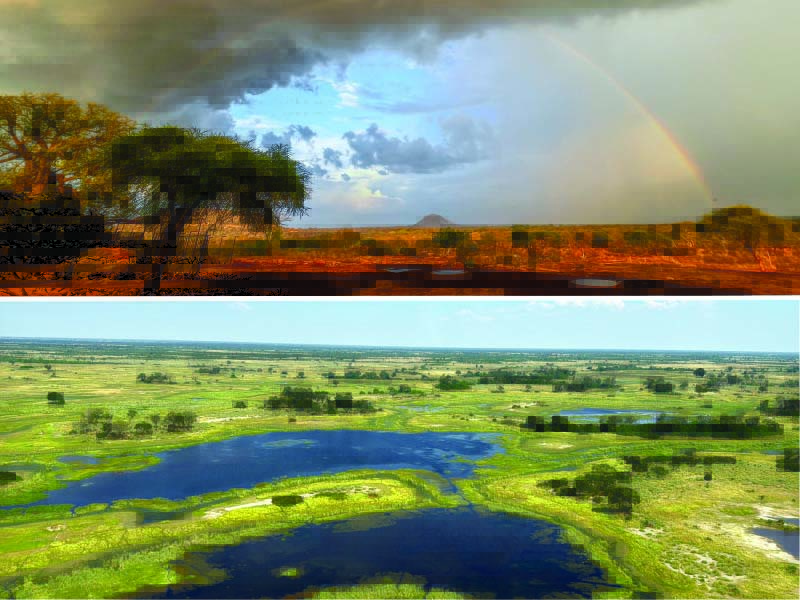
Across much of East and Southern Africa, the safari year unfolds in two distinct yet equally enchanting seasons — each revealing the continent in its own quiet, compelling way.
The peak season, stretching from June through October, arrives as the rains gently retreat and wildlife gathers around life-giving water. There is a sense of quiet anticipation in the air — landscapes open, movement sharpens, and the rhythms of the wild feel beautifully defined. A second, more fleeting peak returns in December, when travellers are drawn back to Africa’s golden horizons for the festive season.
Between these moments lies the green season, from November through May, when the rains return and the land is transformed. Colours deepen into rich, saturated hues, rivers swell and shimmer, and the bush softens into something lush, layered, and quietly abundant — alive with renewal and subtle movement.
Both seasons offer extraordinary encounters. Yet each reveals a different mood, a different texture, a different way of experiencing Africa — not just as a destination, but as a feeling.
Peak Season — Africa at Its Most Defined
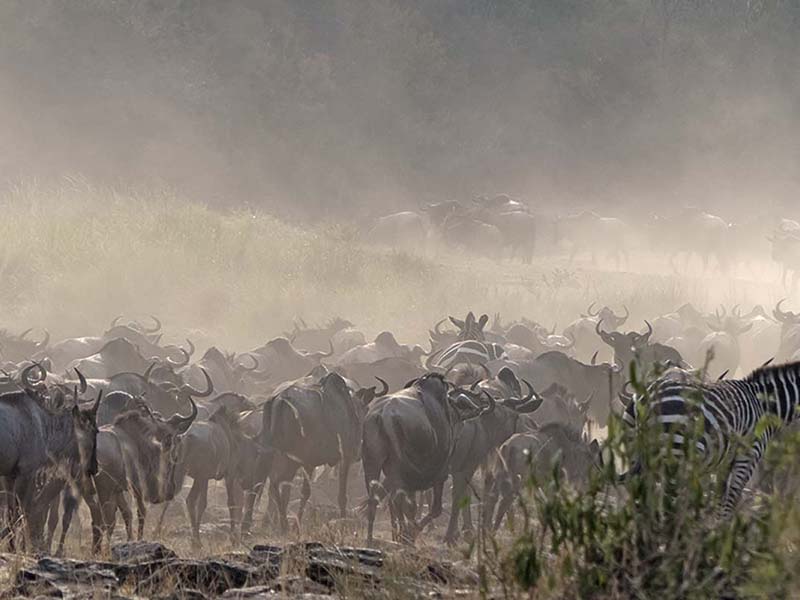
There is a certain clarity to Africa in the dry season that is impossible to ignore. As the grasses thin and water grows scarce, the rhythm of the wild begins to gather itself. Wildlife draws closer to life-giving rivers and waterholes, and with this quiet convergence comes a sense of heightened awareness. Movement becomes easier to follow, more intentional. Predator and prey share the same narrowing stage, and the bush opens as though it is slowly, deliberately revealing its secrets.
In the Masai Mara and the Serengeti, vast herds of wildebeest gather along the riverbanks during the Great Migration, before plunging into the Mara River in one of nature’s most dramatic crossings.
In the Okavango Delta, as floodwaters gently recede, wildlife is drawn onto islands and winding channels, creating an intricate tapestry of life, movement, and quiet interaction.
In South Luangwa National Park, elephants gather in large numbers along the rivers, wild dogs hunt with an ease of movement, while lions have a different sense of ease having access to wildlife close to the last remaining water sources.
And in the remote wilderness of Ruaha and Katavi, the dry season reveals a scale of Africa that feels elemental — vast, raw, and profoundly untouched, where the silence itself becomes part of the experience. Mornings carry a particular sharpness — cool, fragrant air, crystalline light, and horizons that stretch endlessly into the distance. This is Africa in sharp focus. Its most distilled, most revealing expression. And for many travellers, it is the Africa they have long imagined — and quietly longed for.
What Peak Season Asks of You
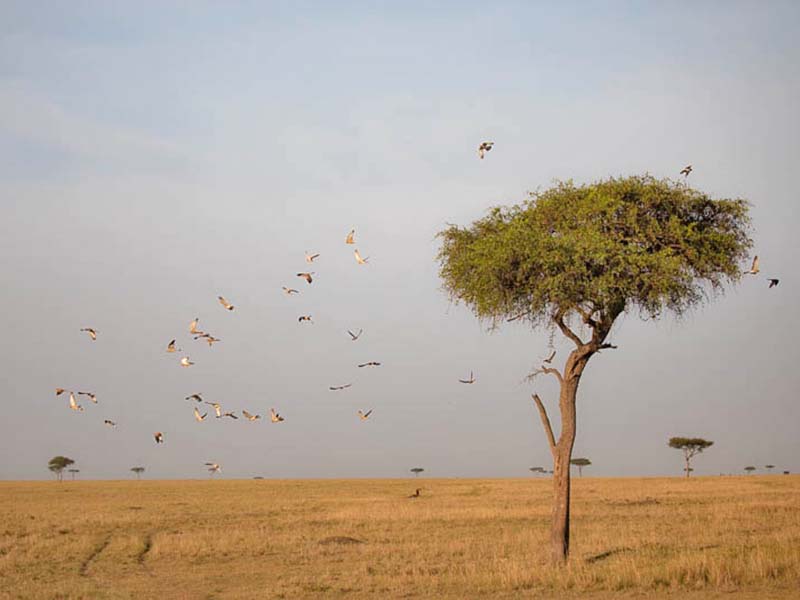
And yet, there is another side to this season — one that is spoken of more quietly.
In iconic landscapes such as the Serengeti and the Masai Mara, peak season can bring a sense of shared presence. Not only wildlife, but travellers too — vehicles gathering at crossings, sightings unfolding in unison, moments experienced together beneath wide African skies.
For some, this lends a certain energy — a quiet anticipation, a collective witnessing of something extraordinary. For others, it can feel as though a layer of intimacy is gently softened.
This is not a flaw. It is simply the nature of a season that offers so much, drawing people from across the world to its most iconic stages.
And it is why how you travel becomes just as important as when you travel.
Private conservancies across the Mara ecosystem, the rolling landscapes of Laikipia, and Botswana’s exclusive concessions offer a more hushed, more considered way of experiencing peak season. The wildlife is no less remarkable — yet the moments feel slower, more personal, more quietly yours. A sighting held in stillness, uninterrupted, has a way of lingering long after it has passed.
And then there are places where scale itself creates solitude. In Southern and Western Tanzania — Ruaha, the vast wilderness of Nyerere, the Mahale Mountains even at the height of the season, the wilderness feels expansive and untouched. Camps are few, distances are vast, and the land absorbs all presence into its own ancient rhythm. There are no crowds here — only space, silence, and the quiet, enduring pulse of the wild.
At its most refined, peak season is not about spectacle.
It is about clarity — about seeing Africa in its most elemental, most quietly profound form.
And then the rains arrive
Not suddenly, but gradually — as if the land is exhaling after holding itself open for months. The first change is subtle. A scent in the air. A softness in the light. Then, slowly, everything begins to shift.
The Green Season — Africa at Its Most Alive
The green season runs broadly from November through May, though its rhythm changes from region to region.
In East Africa, rains tend to arrive in shorter, lighter bursts, allowing many areas to remain open and rewarding throughout the year. In other regions, such as Botswana and Zambia, heavier rains bring certain destinations to a close as the land transforms beyond accessibility.
Where travel is possible, however, Africa becomes something entirely different. The bush thickens. Colours deepen. The horizon softens under layers of cloud and light. Everything feels newly awakened.
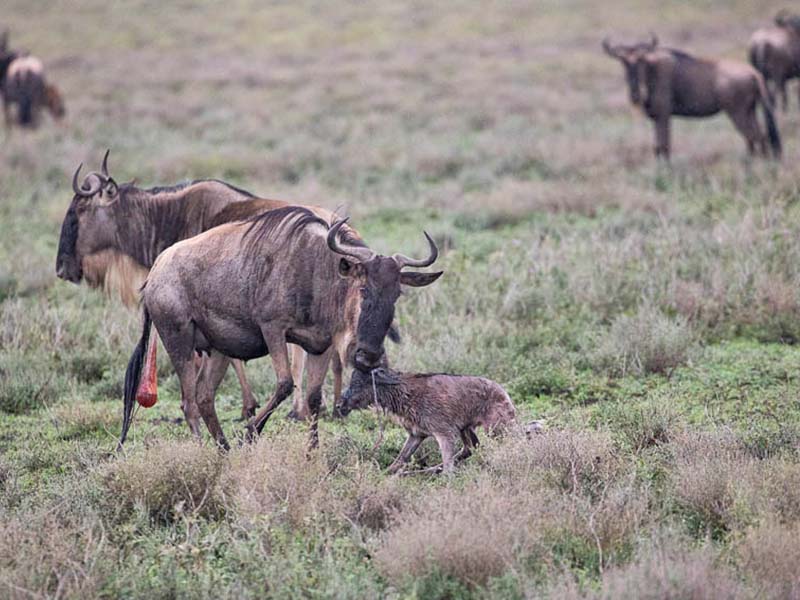
In the southern plains of the Serengeti and the surrounding landscapes of Ndutu, the green season brings one of Africa’s most extraordinary natural cycles — calving season. Between January and March, hundreds of thousands of wildebeest give birth across open plains. Life begins at scale. And with it comes movement, urgency, and a different kind of drama — cheetahs scanning the horizon, lions resting in the long grass, hyenas moving quietly at dawn. It is not the drama of crossing rivers. It is the drama of beginnings.
Birdlife also flourishes during these months. Resident and migratory species alike reach their peak — breeding plumage turning trees and skies into something vivid and almost extravagant. Species displaying and calling with an intensity that the quieter months simply don’t produce.
And perhaps most noticeably, the wilderness feels quieter. Without peak-season traffic, game drives slow. Sightings unfold without interruption. There is time — time to watch, to wait, to notice what might otherwise be missed.
The green season does not reduce Africa’s intensity. It redistributes it. Instead of concentration, there is abundance. Instead of spectacle, there is emergence.
What the Green Season Gives Instead
Wildlife disperses when water is plentiful, moving freely across a landscape restored. Sightings become less predictable — and within that gentle uncertainty lies something deeply rewarding. The bush transforms into a place of discovery rather than pursuit. You are no longer following a set pattern. Instead, you begin to read the land as it reveals itself — slowly, quietly, in its own time. The Great Migration does not pause during these months — it simply shifts. And in the southern Serengeti, during calving season, the scale is nothing short of extraordinary. Hundreds of thousands of calves are born within weeks, scattered across open plains beneath vast, shifting skies. Predators follow closely, and the landscape settles into a softer, more continuous rhythm of life and survival — less dramatic, perhaps, but no less profound. Rain touches everything with a kind of quiet grace. It softens the edges of the land, deepens every hue, and restores a richness that feels almost tangible. The pace of the wild slows, expands, breathes. Africa becomes less defined — but infinitely more alive.
How to Think About It
The question is never which season is better.
It is what you want to feel.
If you are drawn to dramatic crossings, concentrated wildlife, and wide open landscapes, peak season offers that clarity.
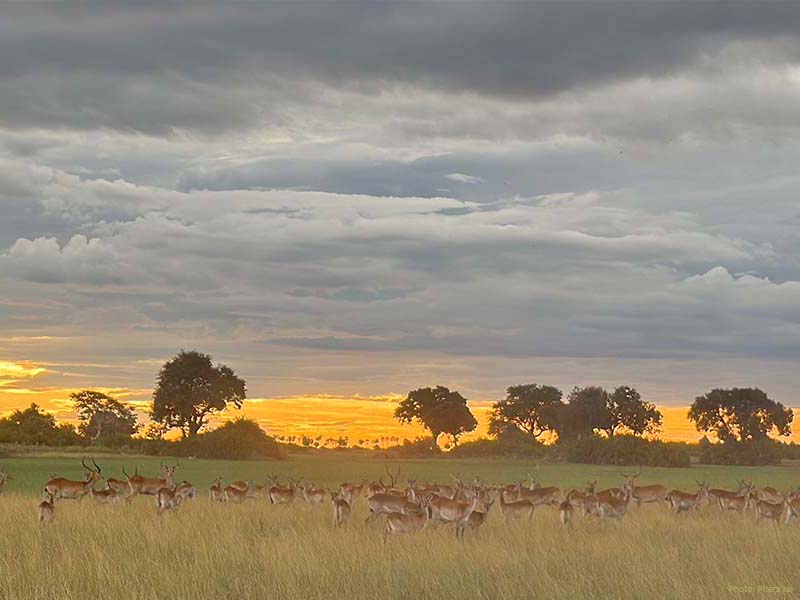
If you are seeking new life, vivid landscapes, dramatic skies, and quieter, more immersive moments, the green season reveals a different kind of beauty.
And for many travellers, the most thoughtful journeys lie in between — in the shifting months of May and November, when Africa holds both stories at once.
Seasons by Destination — A Quick Guide
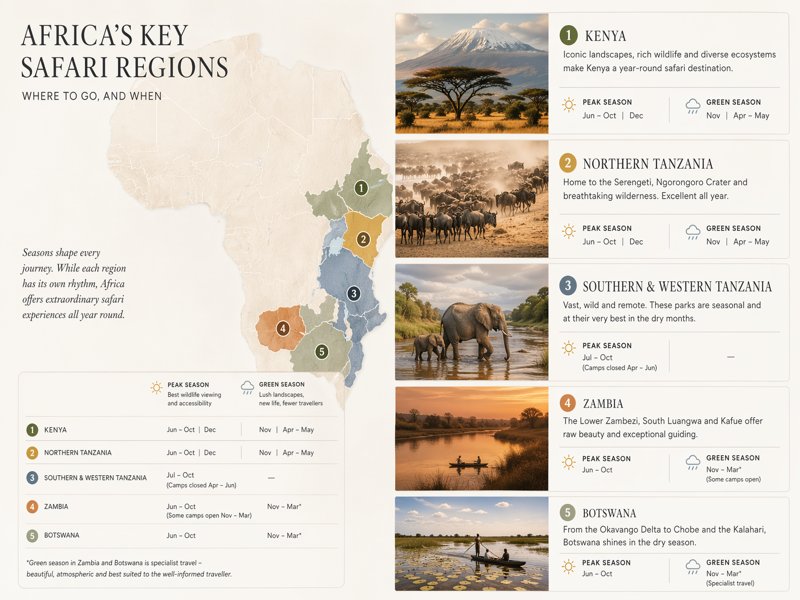
Botswana is at its most iconic between June and October, when the Okavango Delta is in full flood and wildlife gathers in remarkable concentrations. Green season in Botswana brings the rains to the Kalahari and produces a landscape of remarkable, unexpected beauty. The Green season offers a softer, more unexpected beauty — one that rewards those seeking something different.
Kenya and Northern Tanzania are truly year-round destinations. Even in the rains, the wildlife remains abundant and the landscapes deeply rewarding.
Southern and Western Tanzania (Ruaha, Nyerere/Selous, Katavi, Mahale Mountains) operates seasonally. Most camps close from approximately April to June and reopen for the dry season from July through October. These are peak-season destinations by nature — the dry months are when they are at their most accessible and their most rewarding.
Zambia follows a similar rhythm, with its finest experiences unfolding during the dry season, and select camps offering beautifully atmospheric green-season stays
One More Thing
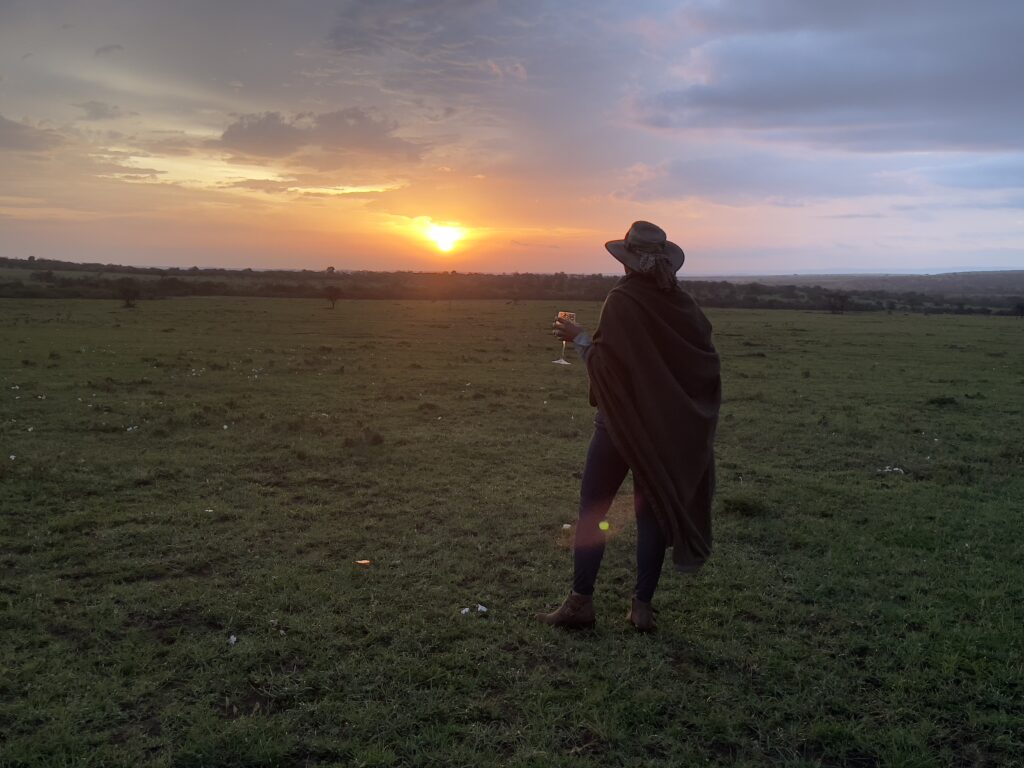
Africa is never the same twice. It shifts with the light, with the rhythm of the rains, with the silent, instinctive movement of wildlife across ancient land. And so, each journey becomes its own interpretation of the continent — shaped not only by place, but by time, by season, by the subtle unfolding of the moment itself. Peak season and green season are not opposites. They are simply two expressions of the same extraordinary world — each revealing something different, something deeply felt. And after years of crafting journeys across Africa, this is what we know to be true:
There is no single “best time” to go. Only the time that feels right for you.
If you find yourself wondering when to travel — and what each season might feel like in the places that quietly call to you — we would be delighted to guide you. Because the most meaningful safaris are never defined by season alone. They are shaped by timing, by intention, and by a deeper sense of connection to the land, and to the experience itself.