
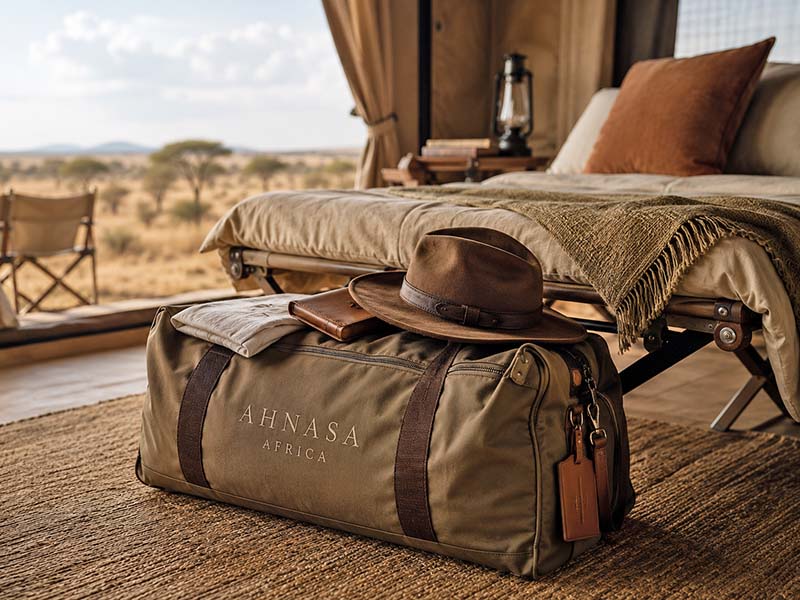
What To Pack For Safari — And Why Less Always Becomes More
There is something quietly ceremonial about packing for a safari.
Long before the journey begins — before the first bush flight lifts above the plains, before coffee is poured beside a morning fire, before elephants appear silently out of the dust — there is this moment. An open bag on the bed. The soft rustle of clothes being folded. Someone holding up three nearly identical linen shirts and wondering, quite seriously, if all of them are necessary.
They are not.
Safari packing has a reputation for being complicated. The soft bags. The weight restrictions. The warnings about bush planes and cargo holds. It can sound slightly alarming — until you understand that safari travel is designed around a beautifully liberating idea.
You need far less than you think you do.
Once that lands, the whole experience shifts. Packing stops feeling restrictive and starts feeling intentional. You begin editing life down to the essentials — not in a limiting way, but in the deeply satisfying way that good travel sometimes allows. A few well-chosen shirts. Comfortable shoes. A warm layer for dawn. Binoculars. Curiosity.
The rest, Africa provides.
The Soft Bag Rule — And Why It Exists
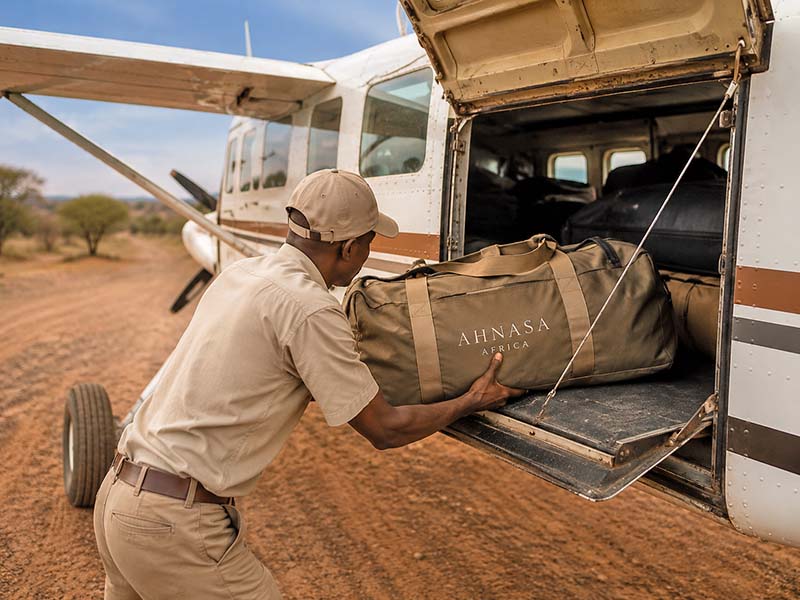
If there is one piece of safari wisdom worth committing to memory early, it is this: bring a soft-sided bag.
Think duffel. Canvas holdall. Something squashable and practical. Not your elegant four-wheeled aluminium case, however well-travelled it may be — that one sits this adventure out.
Here’s why. Much of Africa’s most beautiful wilderness is only reachable by small bush aircraft — Cessnas, Caravans, sometimes helicopters. These flights are one of the great underrated pleasures of safari travel: a tiny plane skimming over elephant herds, dirt runways appearing out of nowhere, the pilot pointing toward giraffes beneath the wing as though this happens every day (it does). But these aircraft have very small cargo holds. Soft duffels can be squeezed in. Hard-shell cases cannot.
The dimensions that work: approximately 62cm long, 30cm high, 25cm wide.
Weight allowances vary slightly by destination and aircraft, but as a general rule, plan for between 15 and 20kg total — including your hand luggage. Everything counts: your main bag, your camera bag, your daypack. Always pack for the lower end of that range and you will never have a problem.
There is something deeply freeing about everything you need fitting into one beautifully packed bag. Travelling this way feels rather wonderful.
The Part Nobody Expects — How Little You Actually Need
This is the moment most safari travellers visibly relax.
Despite the remoteness of the places you are going, safari camps are remarkably thoughtful. Most provide excellent toiletries — shampoo, conditioner, body wash — so there is no need to pack full-size products. And most offer a laundry service: clothing hand-washed and dried beneath the African sun, which somehow leaves everything smelling impossibly fresh. At some luxury and ultra-luxury properties, washing machines are available and laundry is returned beautifully pressed and folded. That said, plan for hand washing and sun drying as the norm — it works beautifully, and nobody has ever complained about the results.
Which means this: three or four well-chosen changes of clothes are more than enough for a week.
Nobody on safari is paying attention to outfit repetition. Least of all the wildlife. And somewhere around day three, most guests realise they have been rotating the same favourite shirt quite happily — wondering why they ever packed “options.”
Safari has a way of curing overpacking tendencies.
What Safari Style Actually Looks Like
The phrase “safari chic” has caused untold confusion over the years. People imagine linen drama. Structured hats. Carefully curated looks from old films. The reality is considerably more relaxed — and far more elegant because of it.
Safari style is about ease. Soft neutral colours that look beautiful against the landscape. Layers that carry you from the biting cold 6:00am game drives to warm afternoons beside the pool. Clothes you can sit in for hours while watching a leopard sleep in a tree.
The palette to pack:
Warm sand, olive, khaki, stone, faded earth tones. Avoid bright white — it displays every grain of safari dust by breakfast.
One important note from long experience: the hat absolutely needs a strap. There is a particular sadness reserved for watching a favourite hat disappear backwards out of a moving safari vehicle while tracking cheetahs across the savannah.
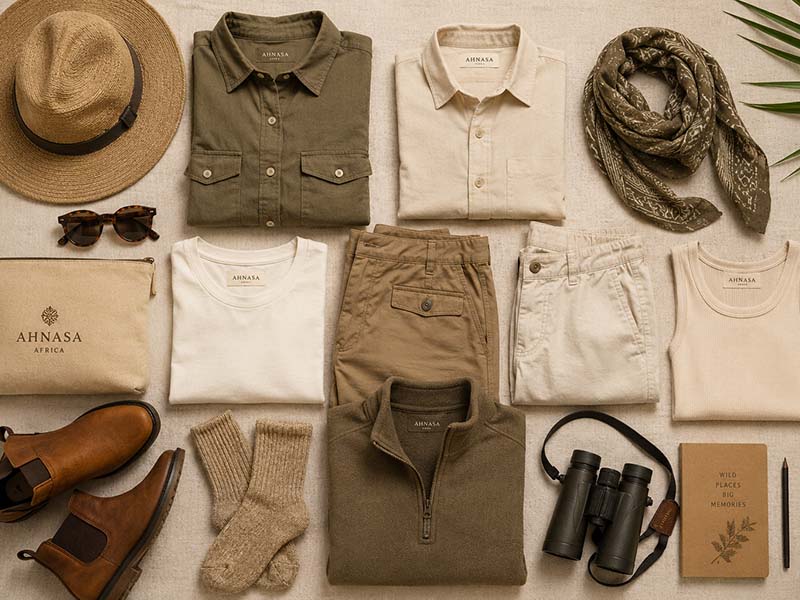
The Capsule Wardrobe We Recommend
Clothing:
- 3–4 lightweight shirts in breathable fabrics
- 2 pairs of comfortable convertible safari trousers
- 1–2 pairs of shorts
- Long sleeves for evenings and sun protection
- A warm fleece or light down jacket for early mornings — non-negotiable
- A waterproof or windproof layer
- Good walking shoes or light hiking boots
- Sandals or camp shoes
- Swimwear — the afternoon pool between game drives is one of safari’s most underrated pleasures
- Underwear and socks
- A scarf that doubles as a sarong — endlessly versatile
The things that genuinely matter:
- High-factor sunscreen — SPF 50 minimum, and more than you think you need
- Insect repellent — DEET-based or a good natural equivalent
- Personal medications and a small first aid kit
- Lip balm with SPF
- Binoculars — the single thing people most consistently wish they had brought. Do not leave without them
- A small daypack for game drives
- Sunglasses and a wide-brimmed hat (with a strap)
Leave behind:
- Hard-shell luggage
- Overly formal or delicate clothing
- Strong perfume — it attracts insects and can disturb wildlife
- Jewellery you would be devastated to lose
- “Just in case” outfits
- Camouflage clothing — illegal in several African countries.
And perhaps most importantly: leave behind the idea that safari requires perfection. The best moments usually happen when nobody is thinking about appearances at all.
When Your Journey Includes More Than Safari
Many of our journeys unfold in chapters. A few days on safari followed by barefoot time on the Kenyan coast. Zanzibar after the Serengeti. Mozambique after Botswana. Which naturally leads to the question: what happens to the extra luggage?
The reassuring answer: we take care of it.
For guests returning through the same hub airport, we arrange for additional luggage to be held securely at the departure point while you travel light through the safari portion. Your soft duffel goes into the bush; the rest waits patiently for your return. No wrestling oversized suitcases onto small aircraft. No carrying beachwear through the Okavango Delta. Just simpler, lighter, better travel — built naturally into the itinerary from the outset.
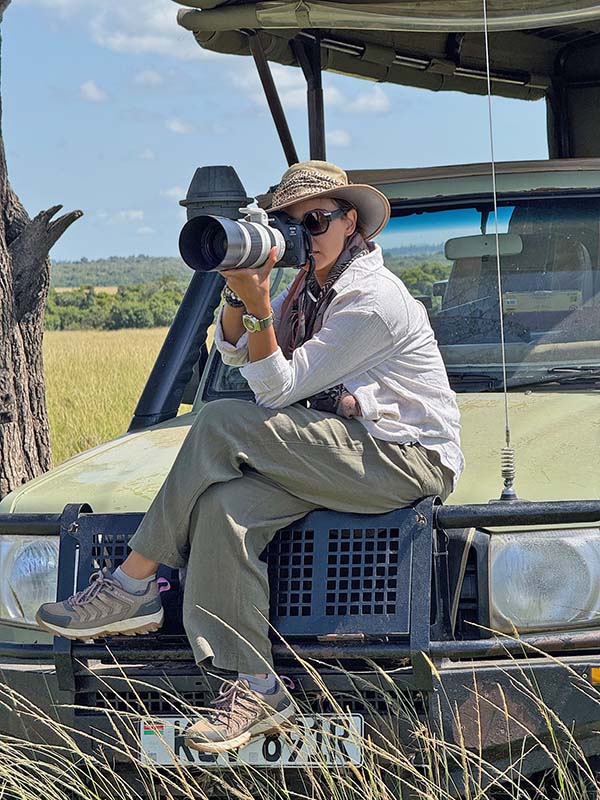
For Photographers — We Understand
Everyone else is packing less. Photographers are attempting to justify three lenses, two camera bodies, backup batteries, and something described casually as “essential support equipment.”
We understand completely. For guests travelling with serious camera gear, additional luggage allowances can often be pre-arranged on flights — typically up to approximately 75kg depending on the airline and aircraft type. The key is telling us early enough to build it into the itinerary properly.
For what it’s worth, the effort is always rewarded. There are very few places left in the world where wildlife photography still feels this raw, immediate, and unscripted.
The Real Luxury
After years of planning journeys across Africa, we have noticed something.
The guests who travel best are rarely the ones who bring the most. They are the ones who arrive ready. Ready for early mornings, dust on their shoes, elephants appearing unexpectedly beside the road. Ready to disconnect from excess and reconnect with something quieter.
Safari teaches this gently.
By the end of the journey, most people realise the things they treasured most were never the things they packed at all.
The soft dawn light over the plains. The sound of hyenas calling at night. Coffee beside a fire before sunrise. The feeling of being very far from ordinary life.
Pack lightly. Africa will take care of the rest.
A Final Word Before You Zip the Bag
Every safari is slightly different — the dry season in Botswana feels different from the green season in Kenya, gorilla trekking in Rwanda requires different preparation from barefoot days on the Swahili coast. Which is exactly why we guide each journey personally.
We have packed for these places ourselves countless times — through dust, rain, dawn flights, and the quiet realisation that what people need most on safari rarely takes up much space at all. If you are unsure what to bring for your particular journey, ask us. We will help you edit, simplify, and prepare properly — so that by the time your safari begins, all that is left to do is arrive, breathe deeply, and step into Africa fully ready.