
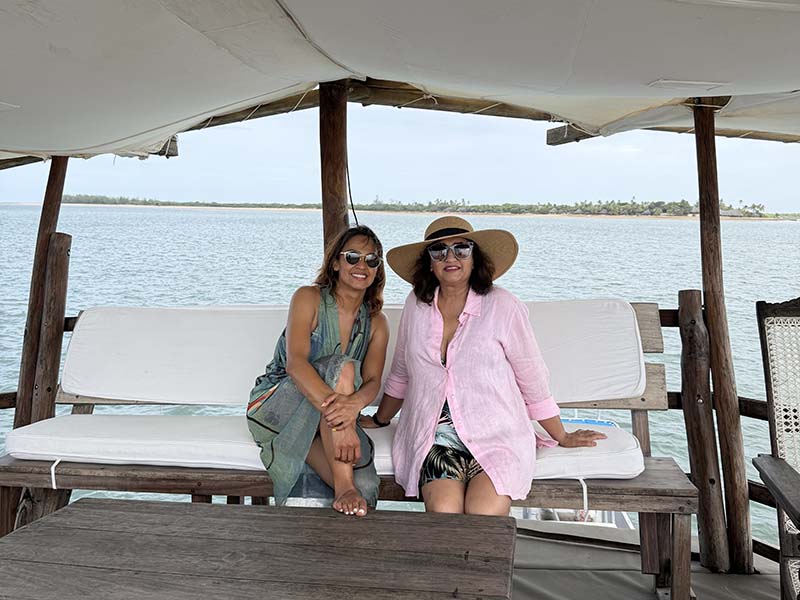
I have been going on safari for as long as I can remember. I have spent years designing journeys across Africa and have seen firsthand what this continent does to people — how it slows them down, opens them up, and reconnects them with things they didn’t realise they had been missing. But this trip was different. This wasn’t about safari. This was about family. For the first time in over a decade, all of us were together in one place, with nowhere else we needed to be. There were birthdays to celebrate, anniversaries to mark, and that growing awareness that life moves quickly, and time together like this doesn’t happen by accident. It has to be chosen. So we chose Lamu. And I don’t think we could have chosen better. There is something wonderfully disarming about the island. Perhaps it’s the absence of cars. Perhaps it’s the donkeys, who seem to be running the place with quiet confidence. Or perhaps it’s simply the slower pace of life, which gently encourages you to let go of urgency and be present. Within days, we found ourselves doing something surprisingly rare: spending uninterrupted time together. Long conversations, endless laughter, shared meals, sunset walks, and stories that somehow become funnier every time they’re told. Of all the remarkable places Africa has given me over the years, this trip reminded me that the greatest luxury isn’t always where you go. Sometimes, it’s simply having the people you love beside you when you get there.
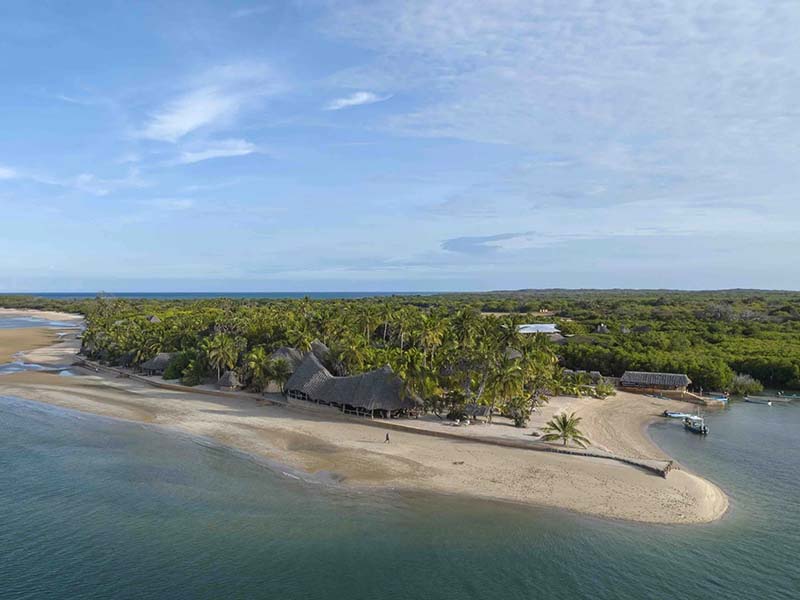
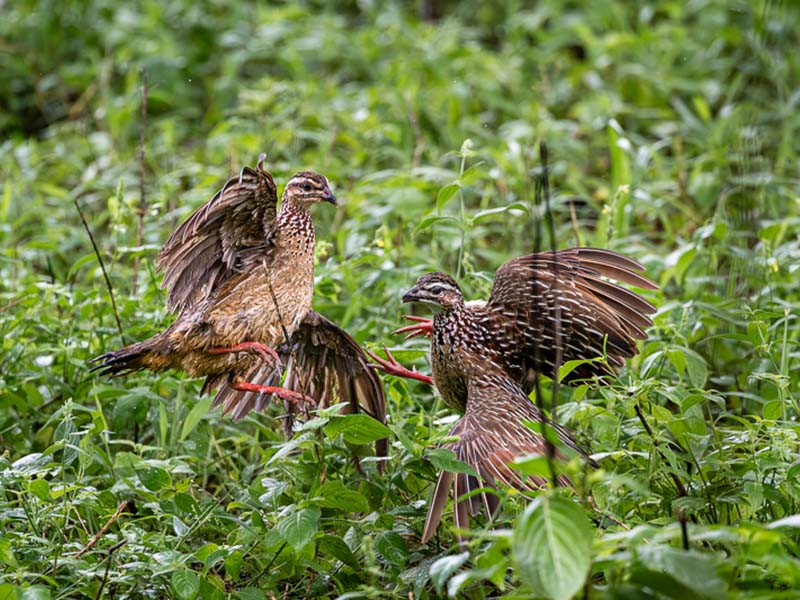
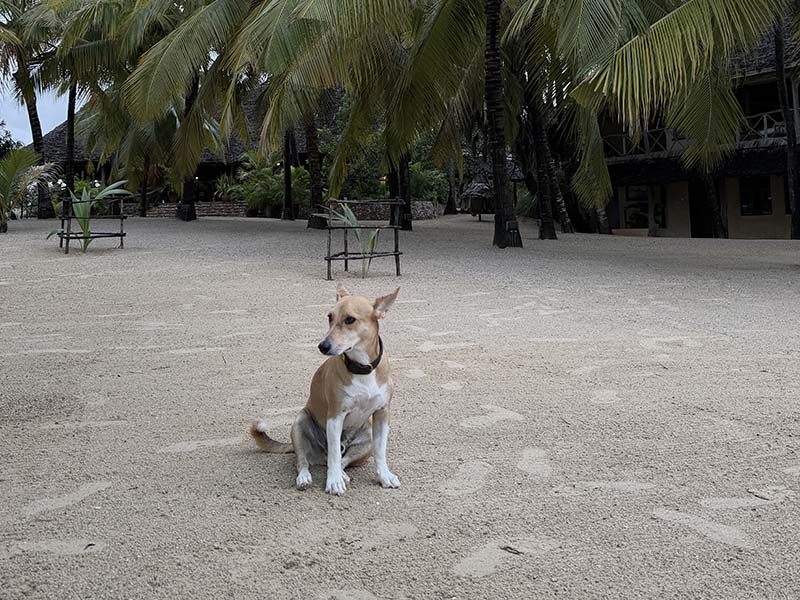
Manda airstrip is little more than a ribbon of tarmac surrounded by salt air, scrubland, and the promise of slower days ahead. From there, it’s a short boat ride across the water, and by the time the shoreline of Manda Bay appeared in the distance, We spent four nights in the beautiful Ocean Front Villas, where life quickly settled into the rhythm of the tides. Mornings arrived with soft light dancing across the water, afternoons drifted by unhurried, and at night we fell asleep to the sound of the ocean breathing just beyond our doors. What struck me most was the sense of space. Not just physical space, although there was plenty of that, but the kind of space that allows a family to simply be together. Time to gather, time to wander off alone, and time to reconnect without feeling crowded. Manda Bay seems to understand this instinctively. One of the biggest surprises of the trip was the Manda Conservancy. A game drive from a beach lodge isn’t something I would normally place high on my list, but the landscape behind Manda Bay has a quiet magic all of its own. The baobabs stopped us in our tracks. Ancient, enormous, and wonderfully eccentric, they stood across the landscape like wise old storytellers who had seen centuries pass and still had a few secrets left to share. We set out in search of the elusive Manda Boubou, found almost nowhere else, while I kept a hopeful eye out for kingfishers, my enduring favourite. The birdlife was exceptional, the monkeys and baboons made appearances whenever it suited them, and then there was Socks. Socks, the resident dog, the life and soul of Manda Bay. Socks accompanied us throughout the drive with the confidence of someone who firmly believed he was both guide and guest of honour. At one point he perched proudly on the bonnet, guiding the way. The birds were magnificent, the baobabs unforgettable, but if we’re being completely honest, Socks may have stolen the show.
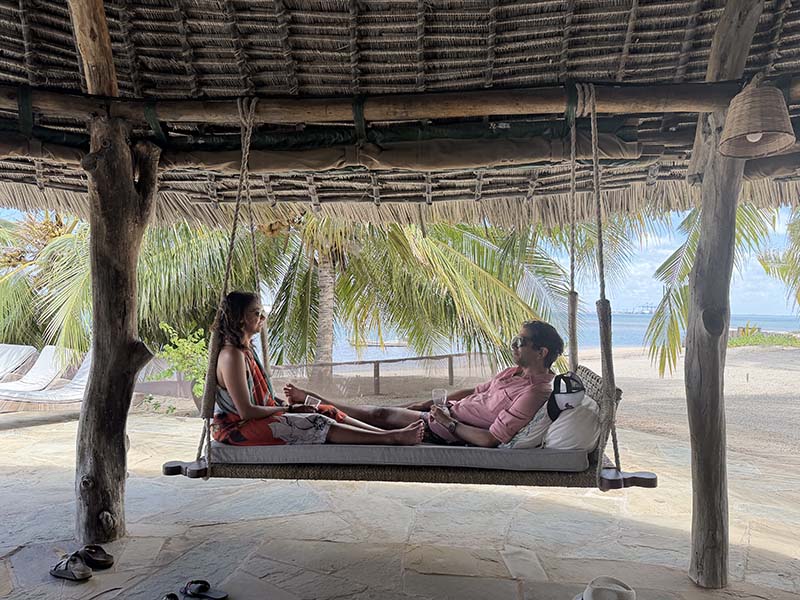
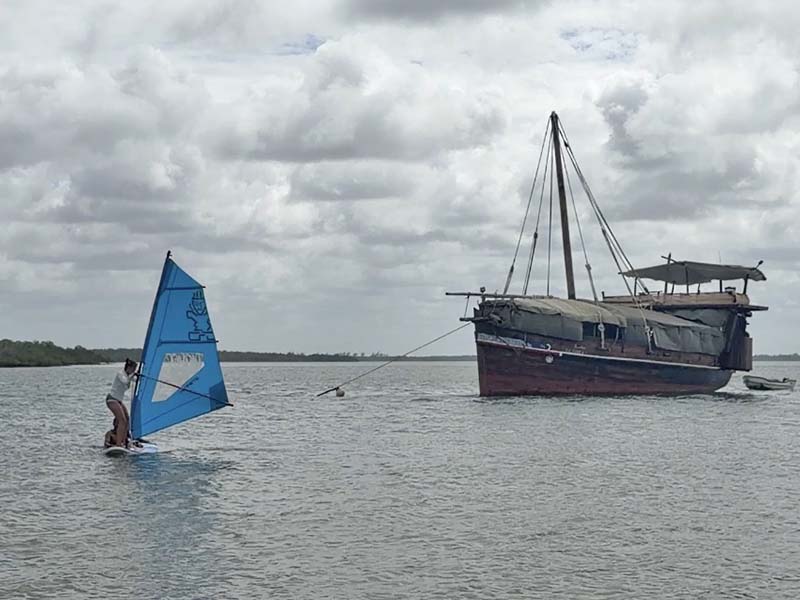
I also decided to try windsurfing. “Decided” is perhaps too strong a word. It suggests careful consideration and a realistic assessment of one’s abilities. The lesson itself was excellent. My instructor was patient, encouraging, and possessed the remarkable ability to remain optimistic despite overwhelming evidence to the contrary. I spent a fair amount of time in the water, occasionally on the board, and provided what I can only assume was excellent entertainment for anyone watching from the beach. By the end, however, I had managed a few respectable moments of actual windsurfing, which is all I choose to remember. What Manda Bay does so beautifully is something surprisingly rare: it works for everyone. It worked for my parents, who appreciated the slower pace and effortless comfort. It worked for my brother and sister-in-law. It worked for my husband and me. Families with young children, honeymooners looking for somewhere romantic and unhurried, solo travellers wanting a place that feels both peaceful and welcoming — everyone seems to find their place here. Part of the magic lies in the balance. One moment you can be paddle boarding, sailing, kayaking, fishing, or attempting windsurfing with varying degrees of dignity; the next, you can be exploring the island’s wildlife, wandering through centuries of history, or doing absolutely nothing at all. And sometimes, as it turns out, doing absolutely nothing while surrounded by the people you love is the greatest luxury of all.
Some evenings arrive quietly and then, without warning, become the ones you find yourself returning to long after they’re over.
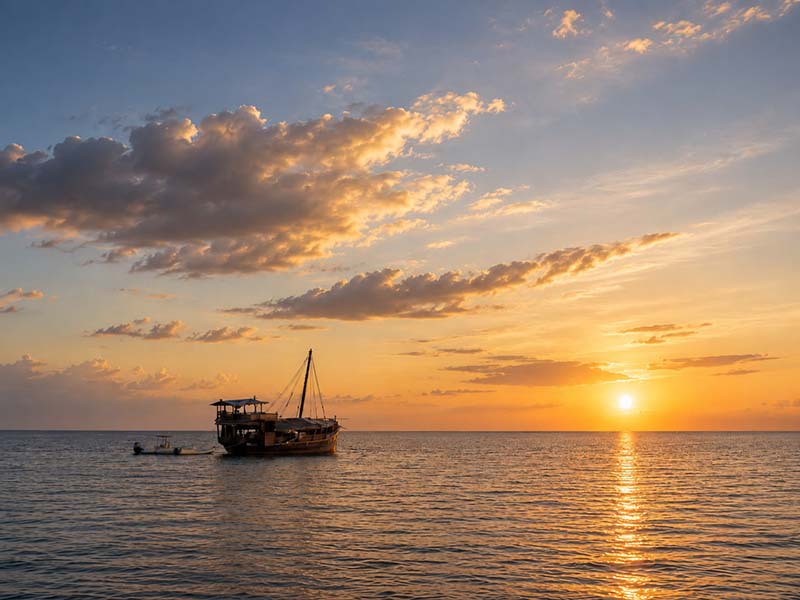
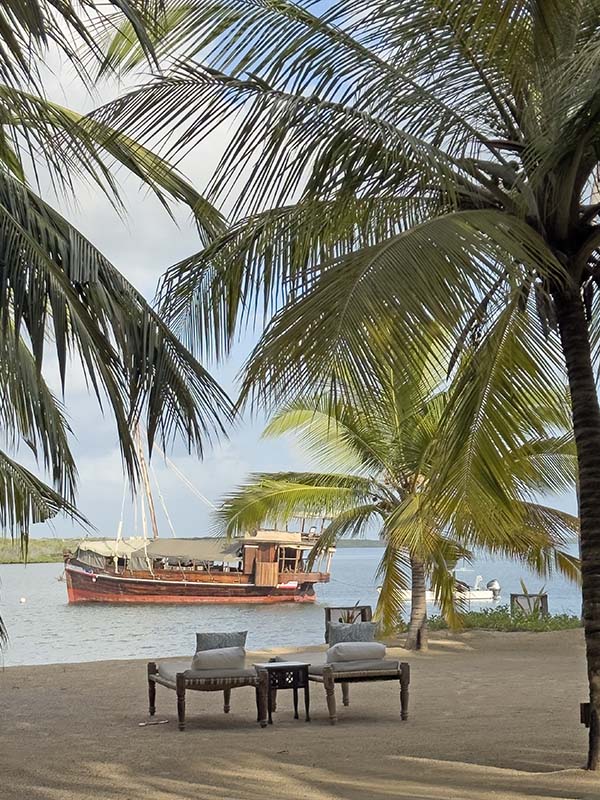
We went out on the Salsabila in the late afternoon — a traditional dhow from the Lamu Archipelago, part of a sailing culture that has moved with these tides for over a thousand years. There is something quietly humbling about stepping onto a vessel like that. We were welcomed aboard with smiling faces and watermelon margaritas. No introductions were really necessary after that.
The crew were incredible — warm, funny, and effortlessly unbothered by anything life might throw at them. Within minutes, any sense of being “guests” had disappeared. We felt like family. Slightly sun-dazed. Extremely well looked after. Drinks flowing, freshly prepared snacks appearing exactly when you wanted them.
Then came the jumping off the dhow.
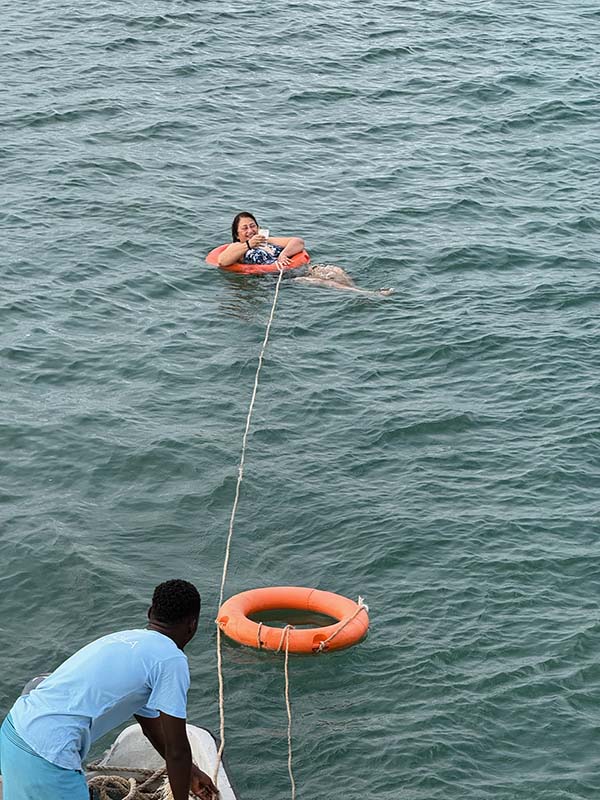
I had been mentally preparing for this. For some of us the decision came easy. For me, it went rather differently: I’m going to do it… no, gosh, it’s too high… okay, I’m going to do it… no, I can’t do this — the slow, slightly mortifying realisation that I overthink everything. Thankfully, encouragement from the family and a helping hand from the host meant I had no choice but to jump. And once I’d done the first one, the second came far more naturally.
What I didn’t expect was my parents. No hesitation. No reserve. Just an uncomplicated, wholehearted joy as they leapt straight in — and I have never once associated my parents with spontaneous leaps into open water. It caught me off guard, not because it was dramatic, but because it was so completely unguarded. We floated. We swam. Mum enjoyed a G&T in the water, which felt entirely appropriate to the occasion. Eventually we climbed back aboard — laughing, salt-soaked, and unselfconsciously happy.
The sun lowered into the horizon. The sea shifted from gold to copper to a soft violet that drew a natural silence from everyone on board. Then, as the stars came out, we danced on the top deck with not a care in the world — that particular freedom that only comes from being somewhere, fully, with nothing else asking for your attention.
Dinner was served, and the dhow settled into an easy rhythm — conversation drifting, stories unfolding, laughter arriving easily and often. Nothing felt arranged. Nothing needed to be. Just the quiet clarity of being exactly where you’re meant to be, with the people who matter most, and the gentle, almost imperceptible realisation that this is the kind of evening that stays with you.
I think I’m already planning my next few trips back onto the dhow.
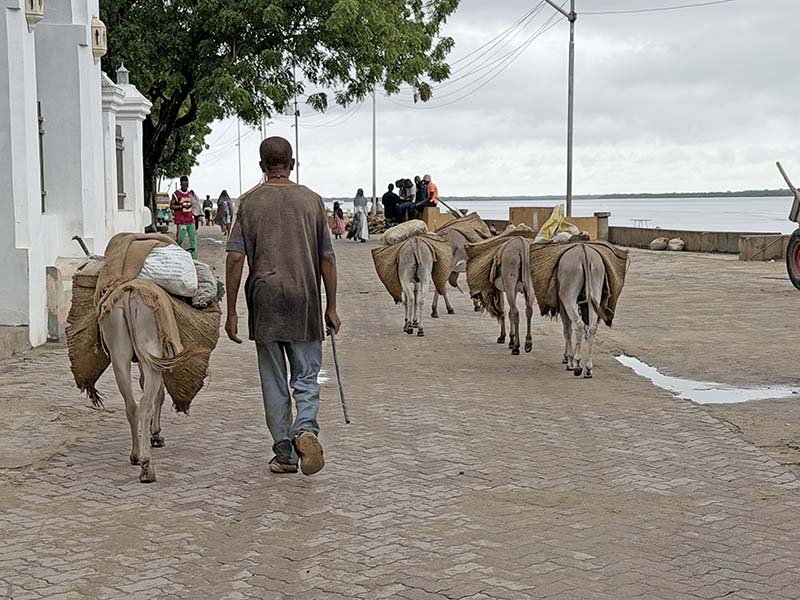
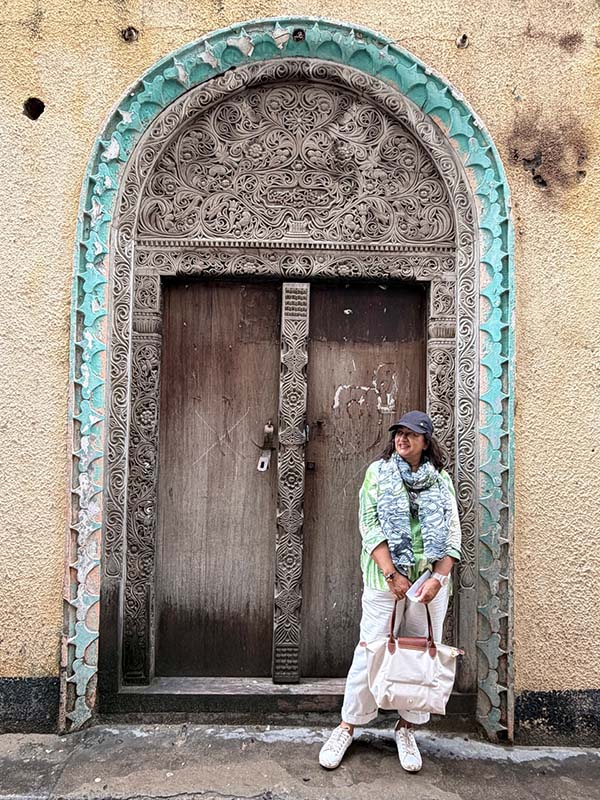
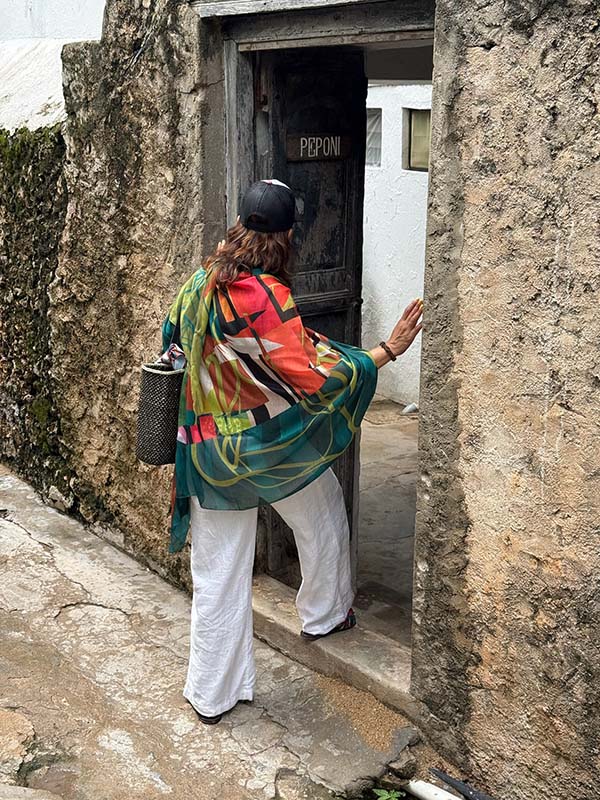
We made our way into Lamu Town and Shela one morning from Manda Bay — a short boat ride across water that somehow feels like a transition in time as much as distance. Lamu Old Town is a UNESCO World Heritage Site, one of the oldest continuously inhabited settlements in East Africa, though none of those descriptions quite prepare you for what it actually is. It is lived-in, layered, and quietly extraordinary. The alleyways are so narrow you regularly step aside for donkeys — who move with the calm authority of beings who clearly know they were there first and are in no rush to change their habits for anyone. Then there are the doors. Carved wooden doors of remarkable beauty, each one different, each one holding its own story — of family, of craft, of centuries passing gently through the same thresholds. I found myself slowing down without meaning to, stopping again and again, as if the town itself was asking for attention one doorway at a time. We found halwa in a small old-town shop — freshly made, thick, intensely sweet, and entirely unforgettable. The best I have ever had. Alongside it, freshly fried cassava chips and fresh coconut water, taken slowly on the street corner. From there, a short five-minute boat ride brought us to Shela, and suddenly it felt like we had arrived somewhere that understood the idea of lunch perfectly. We walked to Peponi Hotel — that legendary waterfront presence that has been part of Shela for so long it feels less like a building and more like part of the shoreline itself. Lunch was fresh, exactly right, and quietly perfect. Sitting on the patio, with the water in front of us and the afternoon unfolding at its own unbothered pace, I found myself thinking: this is the kind of place you fall for quickly — and then spend the rest of your time quietly planning how to return.
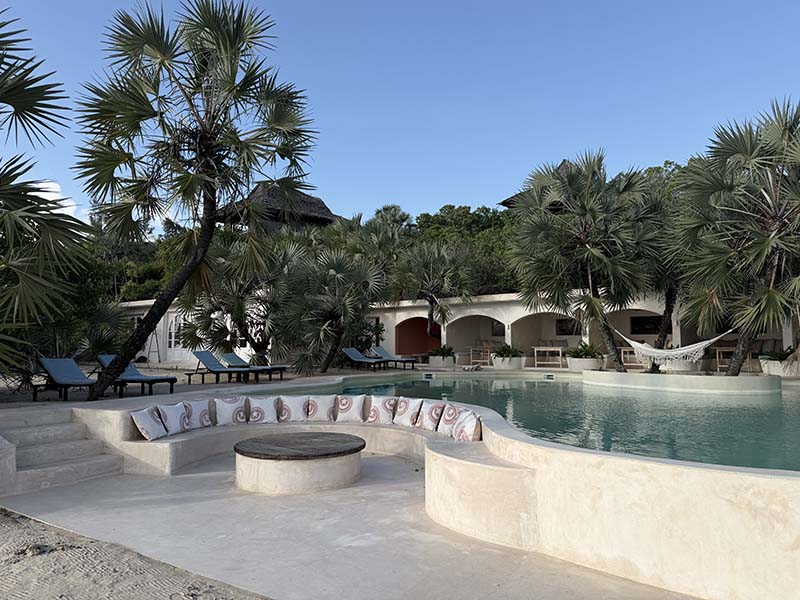
After four glorious days, it was time to head home. As the rest of the family flew back, Mum and I looked at each other and reached a decision that required almost no discussion at all: two more nights at The Cabanas at Kizingoni Beach.
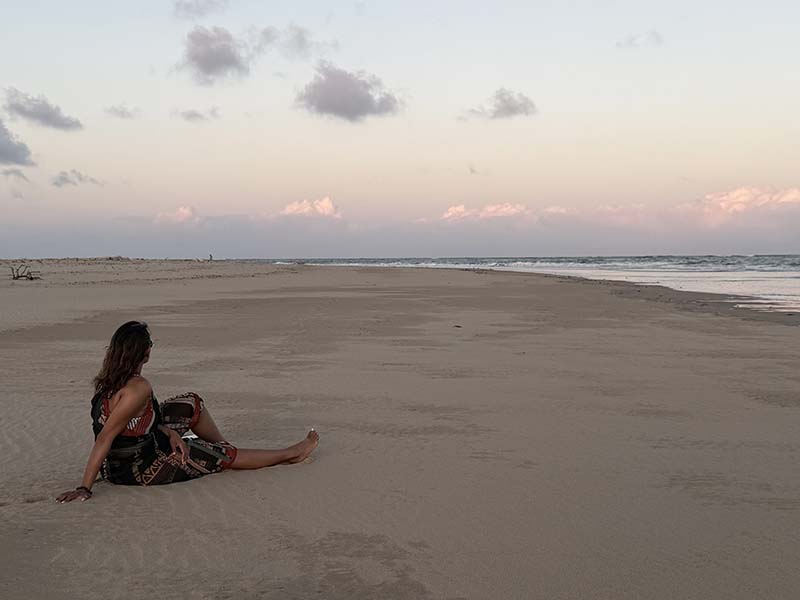
Kizingoni, on the southern side of Lamu Island, feels like a different kind of beautiful. It is quiet, and the beach stretches on and on — the kind of wide, unbroken shoreline that quietly recalibrates your understanding of the word expanse. The sand is powder-soft, the Indian Ocean impossibly warm, and the colour of the water almost defies belief. Nothing here asks for urgency. In fact, urgency would feel entirely out of place.
The Cabanas sit perfectly within this rhythm. Yoga is offered twice daily in the shala — not as an “activity” to schedule around, but as part of the natural cadence of the place. The morning practice, with light filtering softly through the open space, has a way of setting the tone for the entire day: gentle, grounded, unhurried.
Afterwards, the days unfold in their own time.
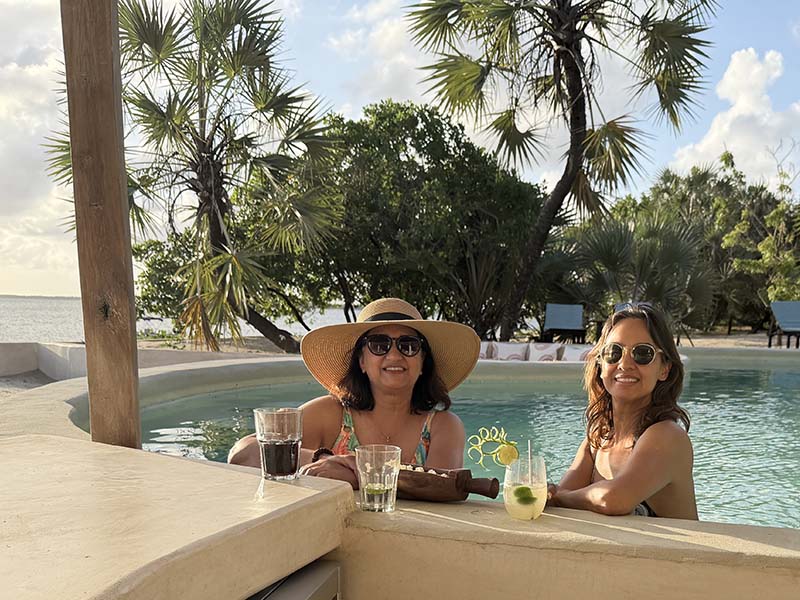
Mum and I took long sunset walks on the beach for no particular reason other than that it felt exactly right. We lingered over cocktails at the pool bar with absolutely no intention of hurrying them along. We had long conversations — the kind that only seem to surface when life finally stops asking for your attention elsewhere. There was space for everything, and pressure for nothing.
Time, quite simply, softened.
This is a place designed for a very specific kind of traveller: couples seeking quiet without performance, honeymooners wanting something intimate and uncontrived, or anyone who has reached the point where rest is not indulgence but necessity. The Cabanas do not impose an experience. They create the conditions for one. The beach takes care of the rest.
Why Lamu
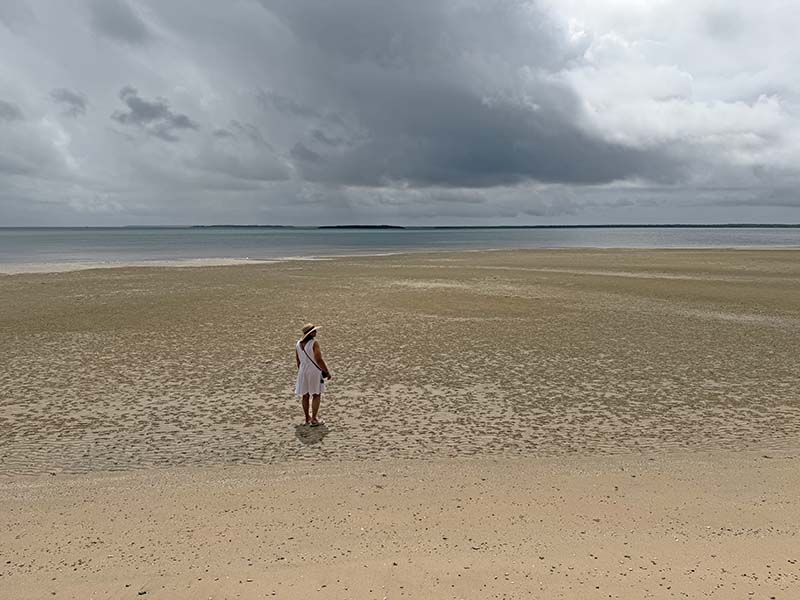
The Lamu Archipelago is not where most people first think of when they imagine Kenya. The first thought is of the Masai Mara, of elephants moving through golden grasslands, the prides of lions, the wildebeest migration, of vast open plains that seem to stretch into forever. And all of that is, without question, extraordinary. But Lamu is something else entirely. It is a different rhythm of Kenya — one shaped by dhow sails rather than safari vehicles, by carved wooden doors instead of lodge entrances, by baobab trees that seem to belong more to myth than landscape, and by an Indian Ocean that appears, quite deliberately, to have made beauty its primary occupation. Life here moves differently. Not slowly for the sake of it, but in a way that gently reminds you that pace is a choice, not a default. Lamu pairs beautifully with a safari — Laikipia or the Masai Mara as the opening chapter, and the coast as the exhale that follows. Or it stands entirely on its own, more than worthy of the journey for what it is and what it offers. We arrived as a family, seeking time together in a place that quietly allows for exactly that. We left carrying a collection of moments that do not need embellishing: parents jumping off a dhow into warm water, kingfishers flashing across still light, ancient baobabs holding their silence, halwa eaten in a small Lamu town street, and long beach walks with my mum in the soft early light. And perhaps that is what Lamu does best. It doesn’t overwhelm you. It simply makes space — for presence, for connection, for the kind of memories that stay with you long after the journey ends. In the end, that is the best thing a place can do.
Some places impress you.
Others stay with you.
Lamu stayed with us.