
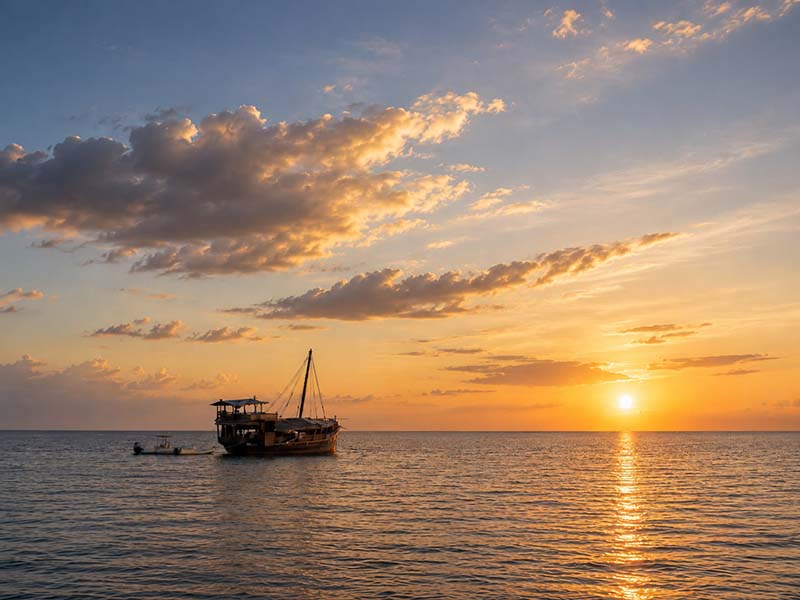
The safari ends — and then, on the finest East African journeys, something unexpected begins.
A short flight south or east. The landscape softening beneath the wing. Dust and acacia giving way to coconut palms and an endless ribbon of Indian Ocean blue. The pace dropping by half.
There is something quietly magical about East Africa’s coast — the centuries of Swahili culture carried on the ocean breeze, the dhow sails drifting across the horizon at sunset, the rare feeling that time has loosened its grip. The luxury here is not found in excess but in space. In waking naturally with the sunrise. In breakfasts that become long conversations. In afternoons that ask nothing of you beyond another swim, a good book, or a walk along a beach where your footprints may be the only ones in the sand.
What makes this coastline so remarkable is its variety. Every stretch has its own personality. From the storied islands of the Lamu Archipelago to the powder-soft beaches of Kenya’s south coast, and onward to Tanzania’s islands of Zanzibar, Pemba, Mafia and the wonderfully remote Fanjove — each destination offers its own interpretation of barefoot luxury, each revealing another chapter of a coastline that reminds us how restorative travel can be when it isn’t trying to impress you.
What follows is a journey along one of Africa’s most remarkable shores.
Kenyan Coast
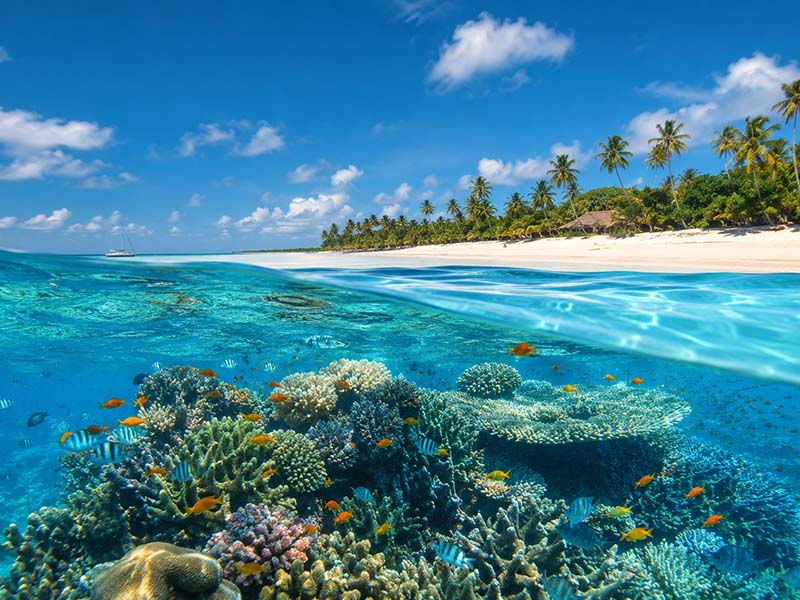
Lamu Archipelago
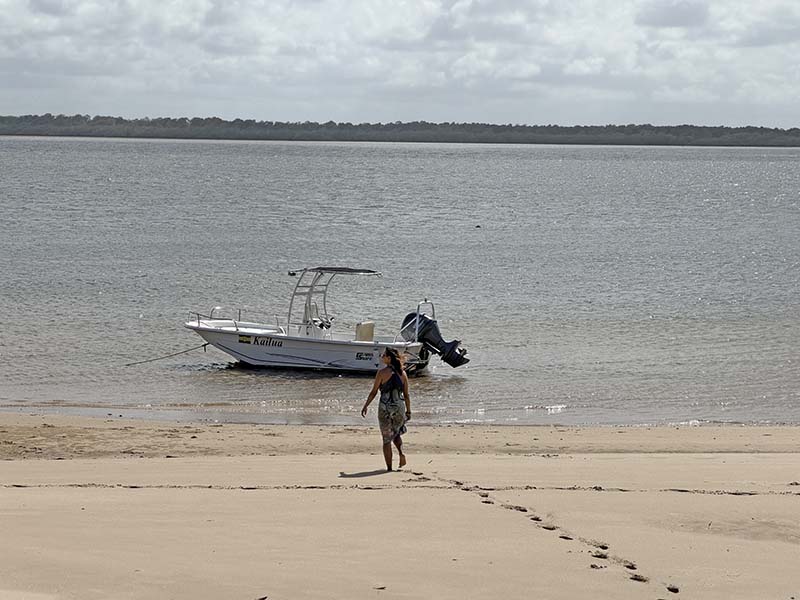
There are very few places left in the world that feel entirely their own. Lamu is one of them.
Scattered across Kenya’s northern coast, these islands move to a rhythm that has changed remarkably little over the centuries. Dhows drift silently between islands beneath billowing white sails. Donkeys outnumber cars. The call to prayer carries across ancient rooftops, mingling with the sound of the ocean.
At its heart lies Lamu Old Town, where centuries of Swahili, Arab, Indian and European influence have shaped one of East Africa’s most remarkable settlements — narrow alleyways between coral-stone houses, intricately carved wooden doors, the scent of spices drifting from open doorways.
But the true magic of Lamu lies in what begins to happen once you’ve been there a day or two. You slow down. Shoes become optional. Breakfast quietly becomes lunch. The urge to fill every hour gently disappears, replaced by the simple pleasure of being exactly where you are. It never asks you to do more. It simply creates the space to do less.
For many travellers, Lamu becomes the unexpected highlight of a Kenyan journey — not because it competes with safari, but because it completes it.
For who: Couples, families, honeymooners and anyone drawn to genuine character — culture, history, and a slower pace. Pairs beautifully with Laikipia or the Masai Mara.
Our recommended properties: Manda Bay, The Cabanas at Kizingoni Beach, Chuchunguni House and The Majlis.
Our recommended experience: A day aboard the Salsabila Dhow, sailing through the archipelago’s sheltered channels — swimming, snorkelling, a lunch on a secluded sandbank, and the sun slipping into the ocean with a drink in hand.
Don’t miss: Watching the dhows return home at sunset, the quiet lanes of Shela Village, the carved doors of Lamu Old Town, freshly made halwa, the baobab forests of Manda Conservancy.
Best time to visit: October to March brings warm, dry weather, calm seas, a festive atmosphere over Christmas and New Year, and seasonal whale shark sightings.
Watamu
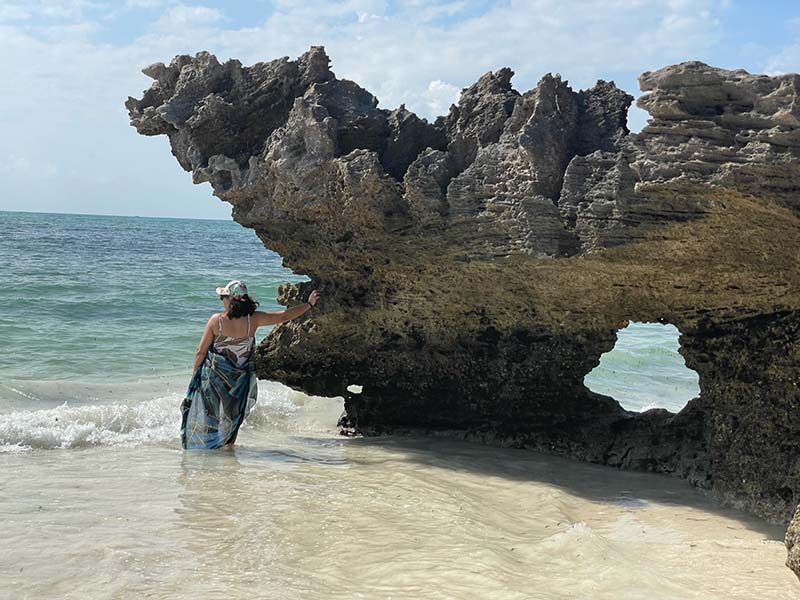
There is a moment in Watamu when you realise the Indian Ocean is as wild as the African bush — a coral reef shimmering beneath the surface, a turtle drifting calmly beside you, the silhouette of a whale shark emerging from the blue.
The ocean here is every bit as alive as the savannah. Coral gardens sway beneath crystal-clear water. Dolphins appear offshore. During the right season, whale sharks and humpback whales pass through these waters as they have for generations.
Yet Watamu never feels hurried by its wildlife. Powder-soft beaches invite long walks. Excellent restaurants — shaped by the town’s Italian heritage — serve some of the freshest seafood on Kenya’s coast. One day may begin beneath the surface; the next may simply be spent listening to the waves with a good book.
For who: Divers, snorkellers, marine wildlife enthusiasts, families — anyone who wants their beach stay to feel as rich in wildlife as their safari.
Our recommended properties: Medina Palms and Hemingways Watamu.
Don’t miss: The coral gardens, swimming with whale sharks in season, watching humpback whales breach offshore, sea turtle encounters, world-class deep-sea fishing, a long seafood lunch after a morning on the water.
Best time to visit: October to March for warm, calm seas and exceptional diving, with whale sharks in season. July to August for humpback whale migration.
Diani
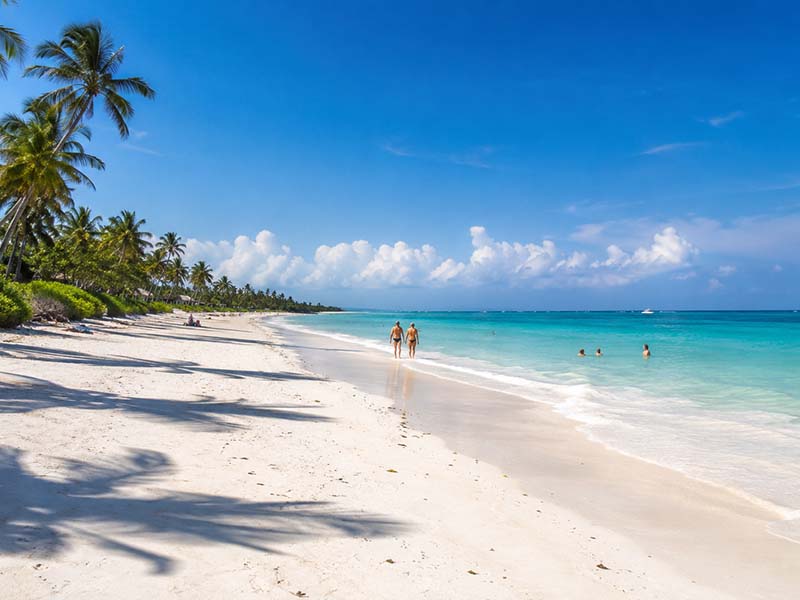
Diani is the kind of beach photographs never quite do justice — wide, white, powdery sand that feels almost unreal underfoot, and a stretch of coastline that is, quite simply, stunning.
There is an effortless quality to life here. Mornings begin with coffee overlooking the Indian Ocean. Bare feet become the default. The sea changes colour almost by the hour, shifting between brilliant turquoise and deep sapphire beneath endless Kenyan skies. Palm trees sway gently in the coastal breeze, and before long you find yourself measuring the day not by the time, but by the tide.
It is the kind of place where nothing feels rushed.
Beyond the shoreline, coral reefs shelter an underwater world alive with colour, dolphins are frequent companions, and at certain times of year whale sharks glide through the waters around Chale Island and Shimoni. Behind the beach, pockets of coastal forest are home to the striking Angolan colobus monkey.
Diani has an unusual ability to become whatever you need it to be — mornings snorkelling the reef or sailing a traditional dhow, or simply a shaded daybed and the reassuring sound of waves. Neither feels like a compromise.
For many travellers, Diani is the perfect final chapter of a Kenyan safari — not more excitement, but gentle restoration.
For who: Families, couples, honeymooners, anyone seeking the classic East African beach experience. Pairs effortlessly with Amboseli, Tsavo, Laikipia or the Maasai Mara.
Our recommended properties: Almanara, Alfajiri, Msambweni Beach House, Kinondo Kwetu, Soroi Blue and The Maji.
Don’t miss: The vibrant coral reef, seasonal whale sharks around Chale Island and Shimoni, humpback whale migration, colobus monkeys in the coastal forest, sunset dhow sailing, long seafood lunches by the ocean.
Best time to visit: October to March for warm, sunny days and excellent snorkelling, with seasonal whale sharks. July to October for humpback whale migration and cooler temperatures.
Tanzanian Coast
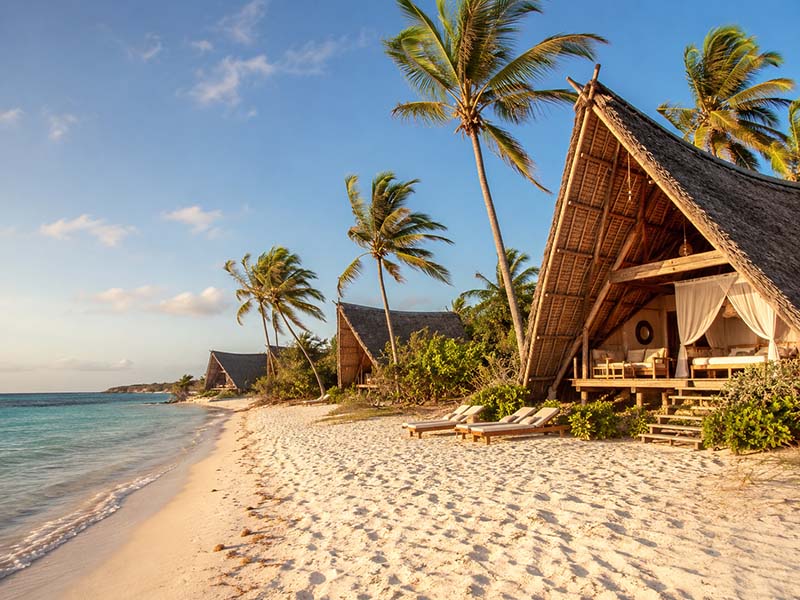
Zanzibar
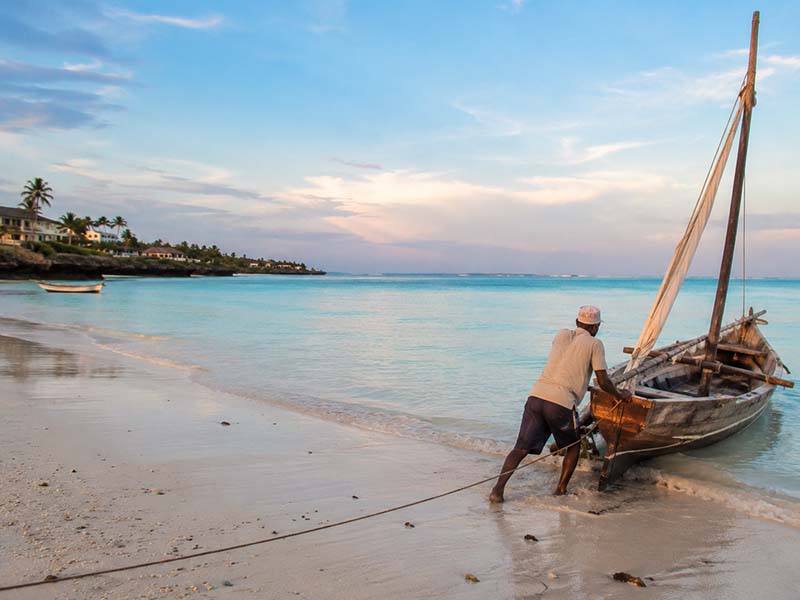
Zanzibar does not need an introduction. It needs to be rediscovered.
The scent of cloves on the afternoon breeze. The call to prayer drifting across coral-stone rooftops. A fisherman pushing his dhow into the sea as the tide turns. For centuries, traders and sailors arrived here with the monsoon winds, leaving behind a tapestry of African, Arab, Indian and European influence — nowhere more evident than in Stone Town, where history is simply part of everyday life.
Beyond Stone Town, the island softens into powder-white beaches and an Indian Ocean that seems impossibly blue. Nungwi and Kendwa in the north invite long swims in calm water; the east coast tides reveal sandbanks and shallow lagoons with every phase of the moon. Jozani Forest shelters the island’s endemic red colobus monkeys, while offshore, the coral reefs of Mnemba Atoll reveal an underwater world every bit as captivating as the landscapes that brought you to Africa in the first place.
It is never just one thing. History and beach. Culture and wilderness. Spend a little longer than planned, and Zanzibar reveals itself in the moments between the famous sights.
For who: One of East Africa’s most versatile islands — equally suited to first-timers, honeymooners, families and returning safari travellers.
Our recommended properties: Kilindi Zanzibar, Zuri Zanzibar, Baraza Resort & Spa, Zawadi Hotel Zanzibar, Zanzibar White Sand Luxury Villas & Spa, Xanadu Villas and andBeyond Mnemba Island.
Don’t miss: Sunset dhow sailing, snorkelling or diving Mnemba Atoll, wandering Stone Town with no destination in mind, a spice farm visit, red colobus monkeys in Jozani Forest.
Best time to visit: June to October and December to February for warm weather and calm seas. April and May are typically wettest and best avoided.
Pemba Island
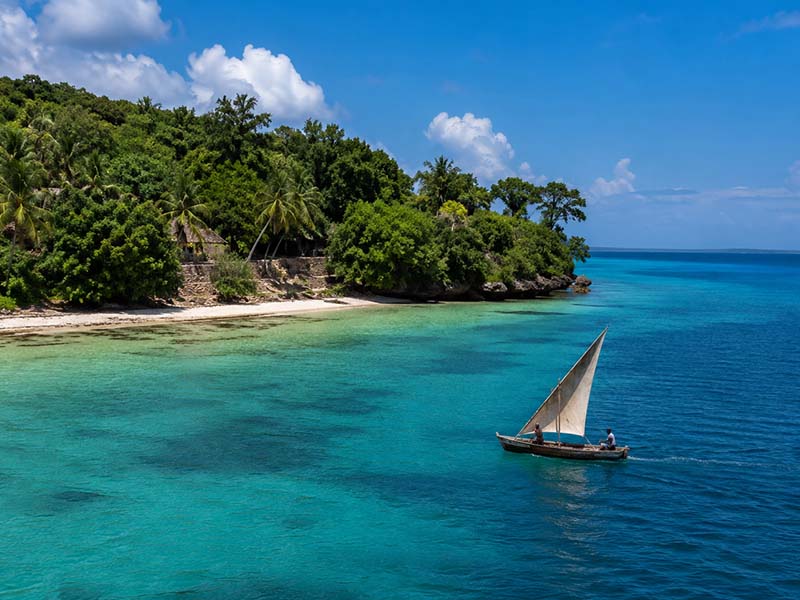
Some places invite you to escape. Pemba quietly invites you to disappear.
Just north of Zanzibar, life here moves gently, shaped more by the tides than the clock. Dense forests spill towards hidden coves; clove plantations perfume the air; fishing boats drift across deep blue channels as they have for generations. Nothing here competes for your attention — and that is precisely the point.
Beneath the surface, dramatic coral walls plunge into remarkable depths with often-breathtaking visibility — for experienced divers, each descent feels less like visiting a reef and more like entering another world. Even for those who never dive, Pemba has a rare quality increasingly hard to find: silence. The breeze through palm leaves, birds hidden in the forest, the rhythm of waves on the shore.
For who: Experienced divers, couples seeking genuine seclusion, travellers who have done Zanzibar and want somewhere quieter and wilder.
Our recommended property: The Manta Resort.
Don’t miss: Diving the coral walls, a night in the iconic Underwater Room, clove plantation and forest trails, simply sitting by the ocean.
Best time to visit: June to October for calm seas and excellent underwater visibility.
Mafia Island
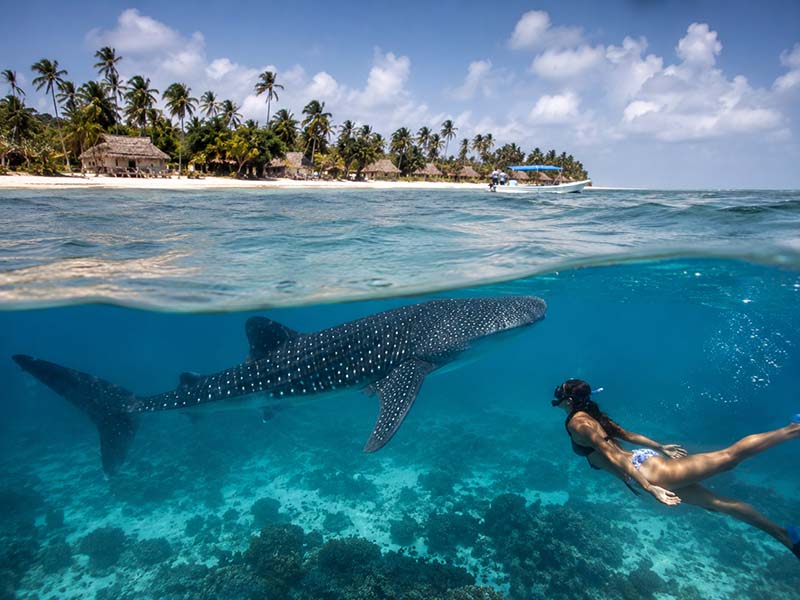
There are places that remind us how wonderfully small we are. Mafia Island is one of them.
Protected within the Mafia Island Marine Park off Tanzania’s southern coast, the tides decide the day here. Each year, as warm currents carry rich plankton blooms through these waters, whale sharks — the largest fish on Earth — arrive almost silently, moving with an effortless grace that seems impossible for creatures of such size. Slipping into the water beside one tends to produce something quieter than excitement: respect, wonder, humility.
Beyond the seasonal visitors, protected reefs flourish, green turtles nest on peaceful beaches, and dolphins move through sheltered channels. Above the water, small villages sit beneath coconut palms and the days unfold gently — long lunches, warm evenings, conversations that linger past sunset.
For who: Divers, marine wildlife enthusiasts, travellers seeking a quieter coastal experience. Pairs beautifully with Nyerere or Ruaha for a Southern Tanzania journey.
Our recommended property: Kinasi Lodge.
Don’t miss: Swimming with whale sharks in season, the protected reefs of the marine park, nesting green turtles, dolphin encounters.
Best time to visit: October to March for the most reliable whale shark encounters (peak January to March). June to October for calm seas and excellent diving visibility.
Fanjove Island
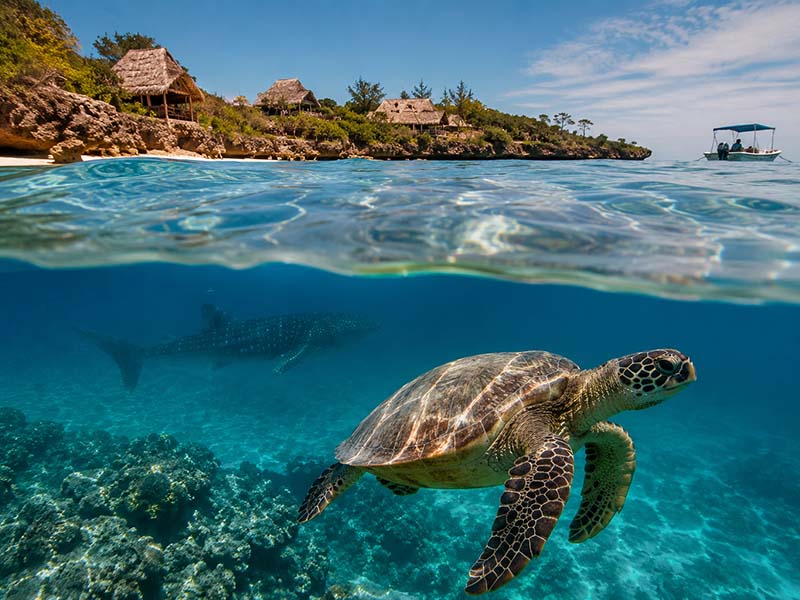
There are places that feel far away. And then there are places that seem to exist outside the world altogether. Fanjove is one of them.
Reaching this tiny island in the remote Songo Songo Archipelago feels less like arriving somewhere than gently leaving everything else behind. What remains is beautifully simple: an endless curve of powder-white sand, water shifting from pale turquoise to deep sapphire, an untouched coral reef encircling the island, and beyond it, nothing but the Indian Ocean to the horizon.
A handful of bandas facing the sea. A restored nineteenth-century lighthouse. A small, warm team. Nothing more is needed. Days become wonderfully uncomplicated — a swim becomes an afternoon of snorkelling, kayaks drift along the shoreline, conversations soften and lengthen, and eventually you begin to notice silence not as an absence but as a presence.
For many travellers, Fanjove is not simply the final destination of a journey — it is where everything the journey has been quietly teaching you finally comes together.
For who: Couples, honeymooners, divers, travellers searching for genuine seclusion. The perfect final chapter after a safari or wider coastal journey.
Our recommended property: Laba Laba Fanjove Island.
Don’t miss: Snorkelling and diving the pristine reef, kayaking the shoreline, climbing the historic lighthouse, sunset dhow sailing.
Best time to visit: June to October for warm, settled weather and exceptional underwater visibility.
The East African coast is not a single destination. It is a collection of places, each with its own rhythm, its own character, and its own quiet way of changing the people who spend time there.
What connects them is not simply the Indian Ocean, but the way they encourage us to travel differently — to linger over breakfast, to follow the tide instead of the clock, to discover that luxury is not always found in having more to do, but in finally having the space to do less.
Perhaps that is why the finest East African journeys never really end when the safari does. They simply exchange the drama of the savannah for the gentler rhythm of the sea.
If you’re planning an East African journey, we’d love to help you choose the coastline that completes it.