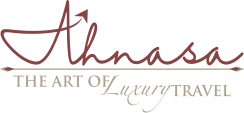
The elephants were about forty metres away, moving slowly through the acacia scrub, when the horses stopped. Not because anyone told them to — they just stopped. Ears forward, bodies still, reading the air the same way the elephants were reading it. For a moment, three species stood in the same landscape paying close attention to each other, and then the herd moved on. The whole thing lasted less than two minutes and left a silence that no Land Cruiser has ever produced.
That moment at Ol Donyo, in the Chyulu Hills of southern Kenya, is as good an explanation as any of why horseback safaris are different from every other way of seeing Africa. Not better, necessarily — but different in ways that matter and that stay with you.
What Is a Horseback Safari?
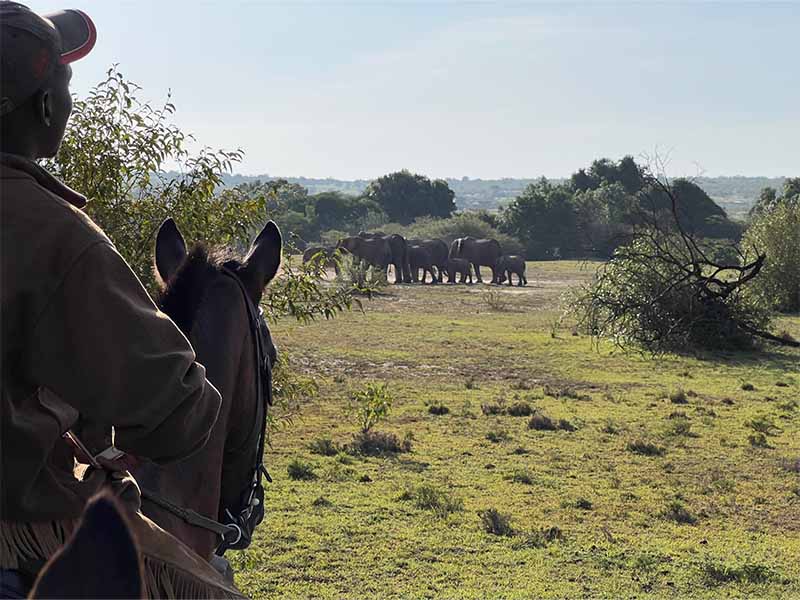
At its simplest, a horseback safari means exploring wilderness on well-trained horses alongside professional guides — but that description undersells it considerably. The difference between a vehicle and a horse isn’t just mechanical. A horse is a prey animal. Other prey animals — zebra, giraffe, elephant — register horses as something closer to themselves than to a Land Cruiser, and they respond accordingly. The defensive distance collapses. Encounters that would send impala bolting from a vehicle happen at thirty metres, twenty, sometimes less. The horses know this, the guides know this, and after an hour in the saddle you start to know it too.
The other difference is sensory. On horseback, you’re not insulated from the bush — you’re inside it. You feel the temperature change as you drop into a lugga (ravine). You hear things before you see them. Your horse’s behaviour tells you something is ahead before your eyes do. It’s an entirely different quality of attention, and it tends to be addictive.
Horseback safaris take several forms. Some properties offer lodge-based day rides — two to four hours out and back, combined with game drives and walks. Others run multi-day expeditions that move camp to camp across vast wilderness, spending four to six hours in the saddle each day and sleeping under canvas at night. The right format depends on your riding level, your appetite for adventure, and how much of the experience you want to be shaped by the horse.
What Riding Level Do You Need?
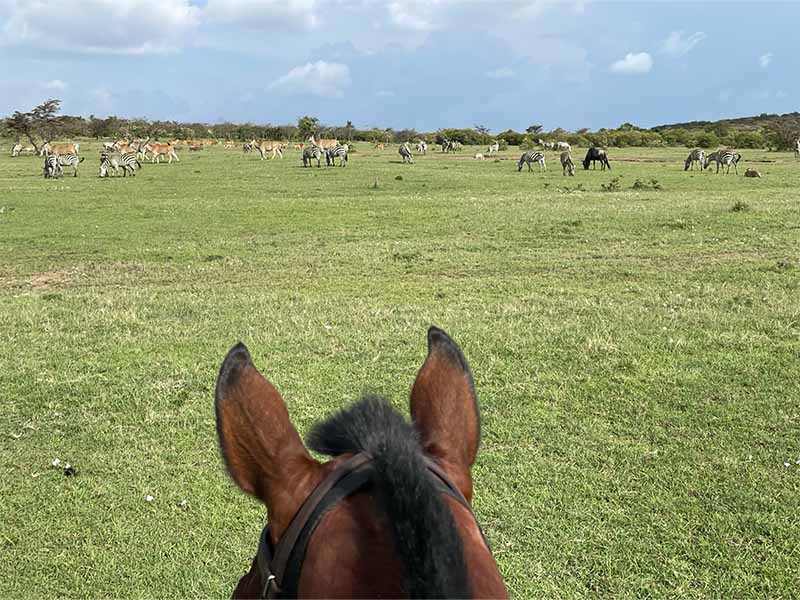
This is the question worth asking honestly before you book, because the answer determines almost everything else about the experience. Horseback safari properties broadly fall into three categories:
Beginner and occasional riders
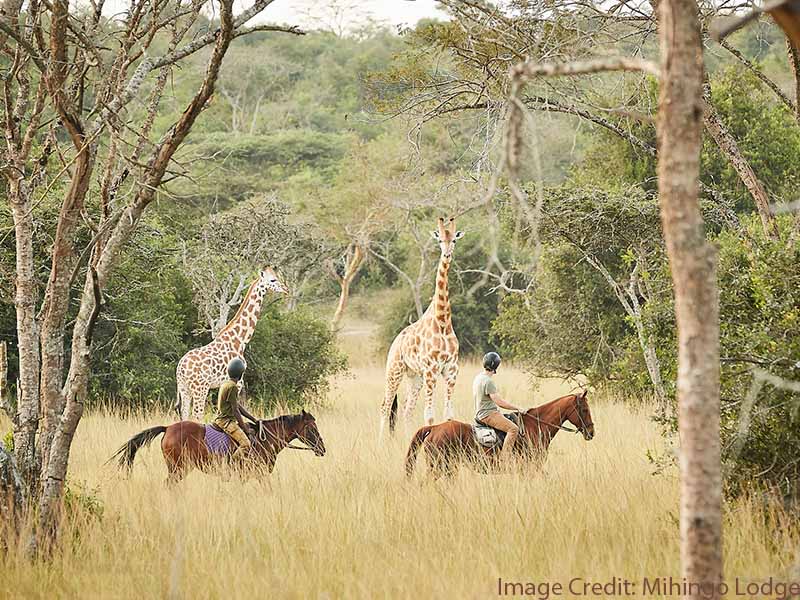
Rider who want a genuine introduction to riding in the African bush have one particularly good option: Lake Mburo National Park in Uganda. Rides from Mihingo Lodge move at a controlled pace through open plains with zebra, impala, buffalo, and warthog — all in an area with no dangerous predators. The terrain is manageable, the horses are well-schooled, and the experience is designed to accommodate nervous or less experienced riders, including families with children. It’s a safe, accessible way to experience Africa on horseback without needing years in the saddle.
Intermediate riders
Riders who are comfortable at all paces, confident in open terrain — open up the majority of what’s available. Ol Donyo Lodge in the Chyulu Hills and Lerai Safari Camp in the Masai Mara both work well at this level, offering shorter lodge-based rides (two to three hours) where the pace is managed but the wildlife encounters are real. The Okavango Delta’s Macatoo Camp, widely regarded as one of Africa’s finest dedicated riding operations, assesses guests on arrival and tailors routes to ability, making it suitable for strong intermediate riders who are comfortable spending longer hours in the saddle.
Experienced Riders
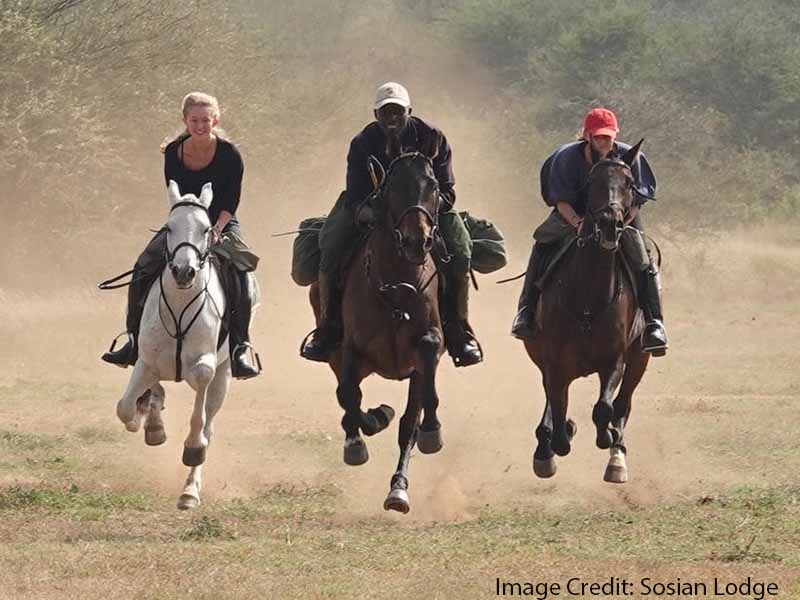
who are fit, balanced, and genuinely comfortable in unpredictable terrain access the full range: Sosian Lodge‘s rougher Laikipia terrain, Borana’s multi-day fly-camp expeditions, Singita Sasakwa’s rides through the Grumeti Reserve, and journeys across the Makgadikgadi Pans. These safaris demand real horsemanship — not because the guides push you into anything unsafe, but because hours in the saddle over variable ground with significant game requires a solid foundation.
The key point: be honest about your level when you enquire. Our job is to design an experience that works — and we can only do that if you're straightforward.
Where to Go: Kenya
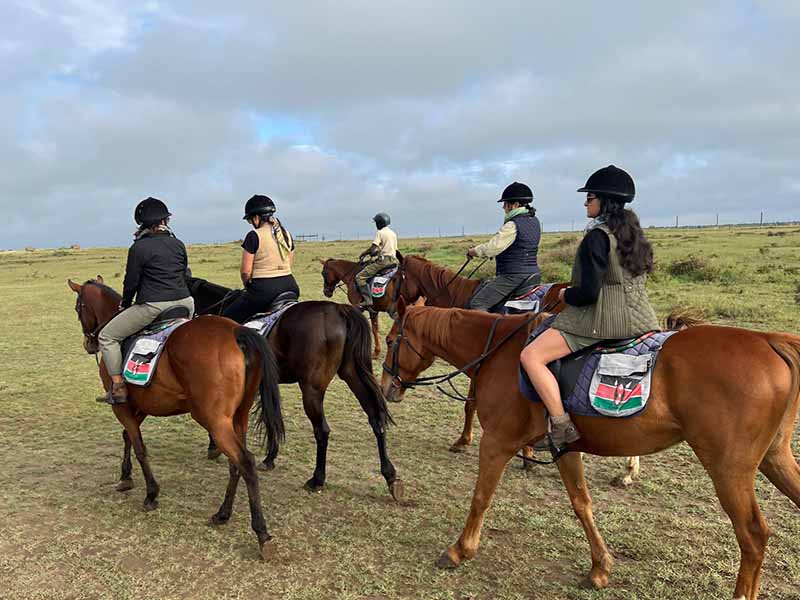
Kenya is the natural starting point for horseback safaris, and Laikipia — the vast highland plateau north of Mount Kenya — is the heartland of it. The landscape combines open savannah, rocky escarpments, and acacia woodland across private ranches and conservancies that give horses room to move properly.
Sosian Lodge is the most equine-focused property in the region, set on a 24,000-acre ranch where riding is central rather than peripheral. Terrain is varied and challenging in the best sense — this isn’t gentle hacking, it’s riding across country with significant game, and it suits experienced riders who want to feel the landscape rather than observe it. Multi-day fly-camp expeditions are available for those who want to go further.
Borana Lodge has perhaps the strongest riding heritage in Laikipia — horses were originally the primary way of moving around the conservancy, and that history shows in the quality of the operation. Day rides and multi-day expeditions run across the Borana-Lewa ecosystem, where the wildlife is used to horses in a way that takes years to establish. The access this creates is tangible.
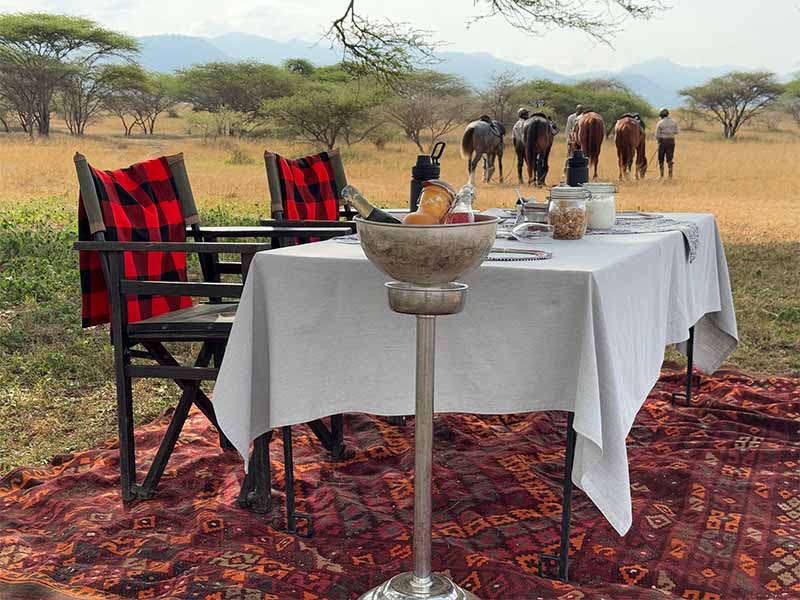
South of Laikipia, Ol Donyo Lodge in the Chyulu Hills combines riding with one of the most dramatic backdrops on the continent. Kilimanjaro sits on the horizon to the south; elephant and giraffe move through the open plains below. The horses here are trained to approach both, and morning rides regularly end with a fully set bush breakfast laid out under an acacia — the kind of detail that makes the whole thing feel less like an activity and more like an event.
In the Masai Mara, Lerai Safari Camp runs riding across conservancy land with Ride Mara. The Mara’s density of game means wildlife encounters are frequent and varied — and occasionally surprising. A leopard sighting on horseback in the Mara is genuinely rare: hard enough to find from a vehicle, the experience of coming across one from the saddle carries a different kind of weight entirely.
Where to Go: Tanzania
Tanzania’s horseback safari landscape is anchored by Singita Sasakwa Lodge in the Grumeti Reserve — 350,000 acres of private concession on the western corridor of the Serengeti, positioned directly on the route of the Great Migration. The equestrian centre runs 18 horses, and riding here means moving through one of Africa’s great wildlife landscapes without another vehicle in sight. Experienced and strong intermediate riders can spend four to five hours a day in the saddle; between June and November the migration corridor brings the prospect of riding among moving herds. This is Tanzania’s most serious horseback safari operation, and it sits within a broader offering that makes it easy to combine riding with walking and game drives across the same terrain.
Where to Go: Uganda
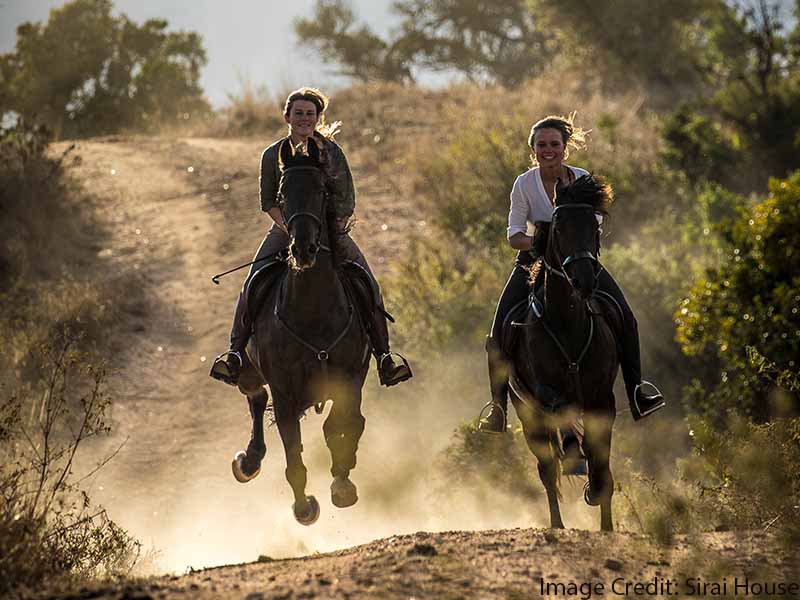
For riders who want to experience Africa on horseback without the intensity of the Mara or Laikipia, Lake Mburo National Park offers a gentler alternative. Rides from Mihingo Lodge move through rolling savannah and acacia woodland where zebra, impala, eland, and buffalo graze with little concern for horses passing through. Rides are structured to accommodate beginners and families, with shorter morning or afternoon options (one to three hours) at a controlled pace.
Where to Go: Botswana
If Kenya is horseback safari’s heartland, Botswana is where it reaches its fullest expression — two landscapes so different from each other that combining them in a single journey makes for one of Africa’s most unusual itineraries.
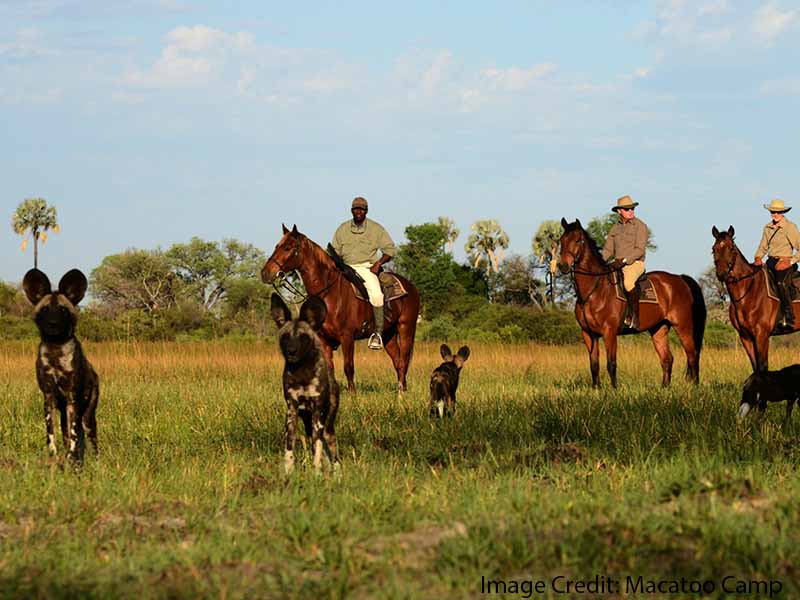
Macatoo Camp in the remote western Okavango Delta is widely regarded as one of Africa’s finest dedicated riding safari camps. This is not a lodge that offers riding as an add-on — it’s a camp built entirely around horses, where days are structured around time in the saddle through papyrus channels, open floodplains, and palm-studded islands. The wildlife interactions here benefit from the Delta’s extraordinary density: elephant, buffalo, lion, wild dog, and an improbable variety of waterbirds at close quarters. Guests are assessed on arrival, routes are tailored to ability, and the combination of big game and big water makes every ride genuinely different.
The Makgadikgadi Pans offer a complete contrast — ancient salt flats stretching to a flat horizon in every direction, almost devoid of landmarks, full of a particular quality of silence that the Delta doesn’t have. From San Camp or Camp Kalahari, seasonal rides across the pans are available, particularly worthwhile between January and March when zebra migrations move through. The experience is less about wildlife density and more about scale, light, and the strange feeling of riding through a landscape that looks like the surface of another planet.
Where to Go: Zambia
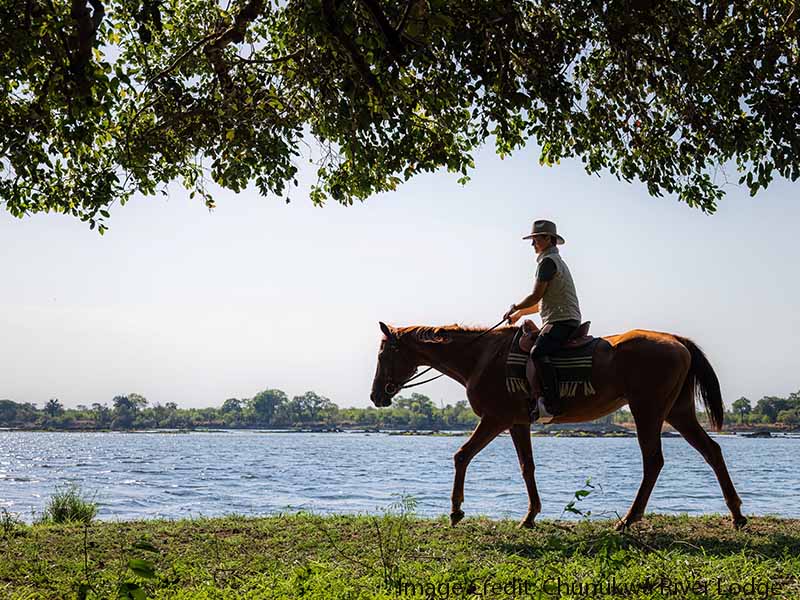
Chundukwa River Lodge, a short drive from Livingstone and Victoria Falls, sits on the banks of the Zambezi and offers a gentler introduction to riding in the African bush. Rides move through riverine forest and open ground along the river, and the lodge works well for riders of varying levels — from a 45-minute introduction to longer half-day rides. It works best as part of a broader Zambia itinerary rather than a dedicated riding safari, but for guests already visiting the Falls or the lower Zambezi, it adds a dimension that game drives don’t offer.
Practical Considerations
When to go varies by destination. Kenya’s riding season runs broadly year-round, though October to March is particularly good in Laikipia before the long rains. The Grumeti riding corridor in Tanzania is June to November, aligned with the migration. Botswana’s Okavango Delta rides from May to October during the dry season; Makgadikgadi is most rewarding January to March. Most properties pause riding during heavy rain periods — the terrain and the horses’ footing both suffer.
What to bring matters more than most guests expect. Long riding trousers or jodhpurs prevent saddle soreness on longer rides; half-chaps are worth packing if you have them. Most properties can provide helmets and some riding gear, but a well-fitting pair of boots makes a difference. Sun protection, a buff or neck gaiter, and a good grip on sunglasses are the other essentials.
Weight limits apply at most dedicated riding camps — typically around 95–100kg/210lb. This is a practical consideration for the horses’ welfare and worth checking before booking.
A Final Note on the Experience Itself
There’s a version of horseback safari that’s easy to sell — the dramatic wildlife encounter, the thundering canter, the Out of Africa romance of it. All of that exists and it’s real. But the thing that stays with most riders, the thing they mention when they describe why they’re going back, is quieter than that. It’s the particular quality of attention the bush demands from the saddle. The way the horses read the landscape before you do. The fact that after a few days you stop being a visitor observing Africa and start being, just briefly, something closer to part of it.
That’s what the elephants were doing at Ol Donyo. Not performing. Just deciding whether we were worth paying attention to, the same way they’d decide about anything else that moved through their landscape. For those two minutes, the answer was yes.
Horseback safaris work best when the experience is matched carefully to your riding level and what you want from Africa. We’ve ridden at a number of the properties featured here, and we design every riding itinerary with that first-hand knowledge in mind. Get in touch to start planning yours.